






.png)
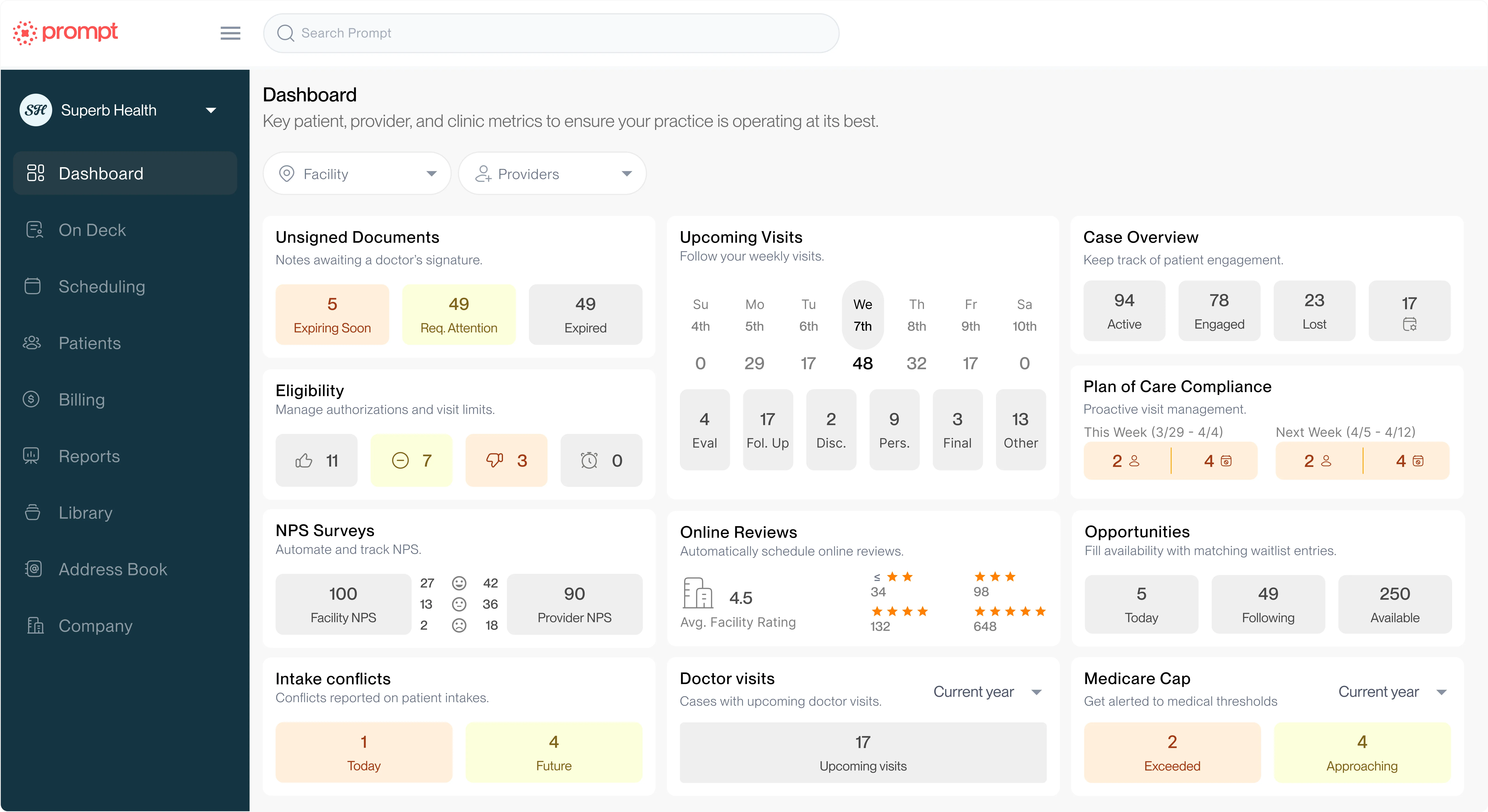
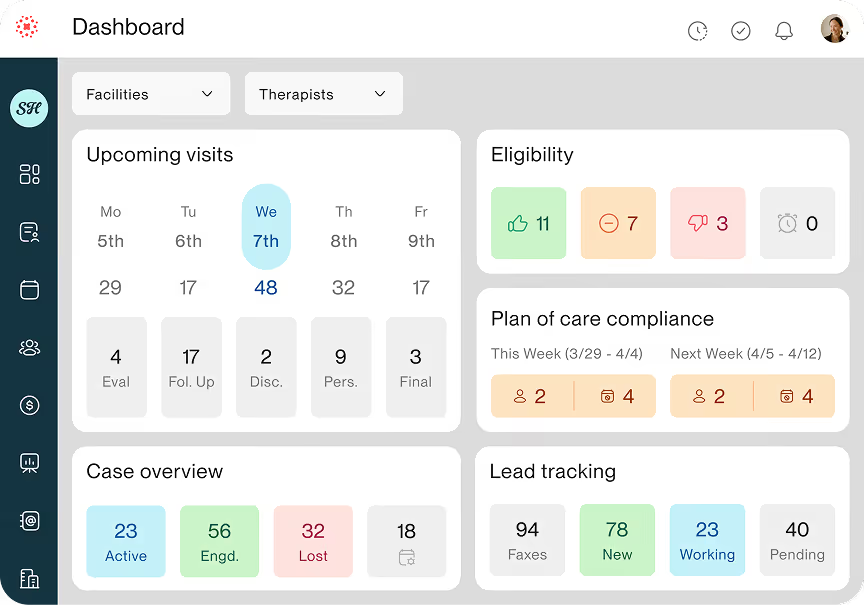
Plans of care outline treatment goals, frequency (e.g., 2x/week), and duration (e.g., 6 weeks). Compliance involves ensuring the patient attends these visits so they can achieve their goals and fulfill the plan made for them. Documentation should support the medical necessity of continued care.
Noncompliance leads to "patient leakage" resulting in poorer patient outcomes and ultimately lost revenue. It can also result in denied claims if the frequency of visits attended does not match the physician's order or the therapist's plan.
Why it matters
Compliance protects revenue and reduces audit risk. It ensures patients receive the dosage of care required to fulfill their plan of care and overcome what brought them to physical therapy in the first place.
Pro Tip
Your schedule shouldn't run on hope. Consistency matters more than complexity. Automated tracking of prescribed vs. scheduled visits prevents drop-off. This allows you to stay ahead of the game. See the signs of potential drop off and educate the patient on how important their attendance and compliance is to their success in PT.
FAQ
Are plans of care required?
Yes. Most payers and state practice acts require a documented plan of care signed by the clinician.
What is a good POC compliance rate?
While it varies by specialty, high-performing clinics often aim for 85% or higher.
How does POC compliance affect billing?
It doesn't change the code you bill, but it ensures you bill for the maximum volume of medically necessary services authorized for that case.