Automation makes some practice owners nervous.
Will patients feel like a number? Will clinicians feel replaced? Will care start to feel transactional?
It doesn’t have to.
How do high-growth PT practices automate the patient journey without losing the human touch?
In our survey of 550+ outpatient rehab therapy practices, high-growth clinics were 1.4X more likely to automate workflows across intake, scheduling, reminders, and billing.
Nearly half use automated reminders and plan-of-care tracking to reduce drop-offs. Yet those same practices report lower burnout and stronger patient retention.
The difference is simple.
High-growth practices automate tedious tasks.
They don’t automate relationships.
Automation done wrong feels robotic
When automation is layered onto disconnected systems, it creates more noise.
Patients receive:
- Duplicate reminders
- Generic messages
- Confusing intake steps
Staff experience:
- More manual cleanup
- More questions
- More frustration
Automation alone doesn’t improve the patient journey. Thoughtful design does.
High-growth practices build automation around real workflow gaps, not on top of chaos. Here are 5 ways they automate the patient journey without losing the human touch.
1. They automate scheduling to protect access
Cancellations are inevitable. Empty slots don’t have to be.
According to a 2025 systematic review in ScienceDirect, no-show and cancellation rates in outpatient physical therapy range from 10% to 73%, accounting for potential revenue losses of up to 50.6% at the practice level.
High-growth clinics use:
- Automated reminders to reduce no-shows
- Real-time waitlists to backfill openings instantly
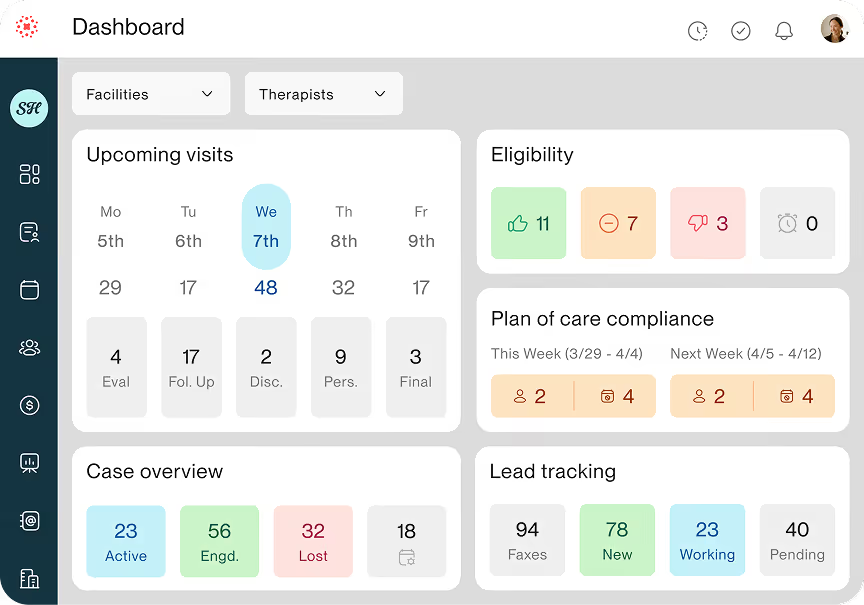
- Plan-of-care tracking to keep patients on schedule
The result:
- Fuller daily schedules
- Fewer drop-offs
- Less scrambling at the front desk
This isn’t about squeezing patients into the calendar. It’s about protecting continuity of care.
2. They automate intake so clinicians start prepared
First impressions matter. No one wants their care to start with a clipboard pileup.
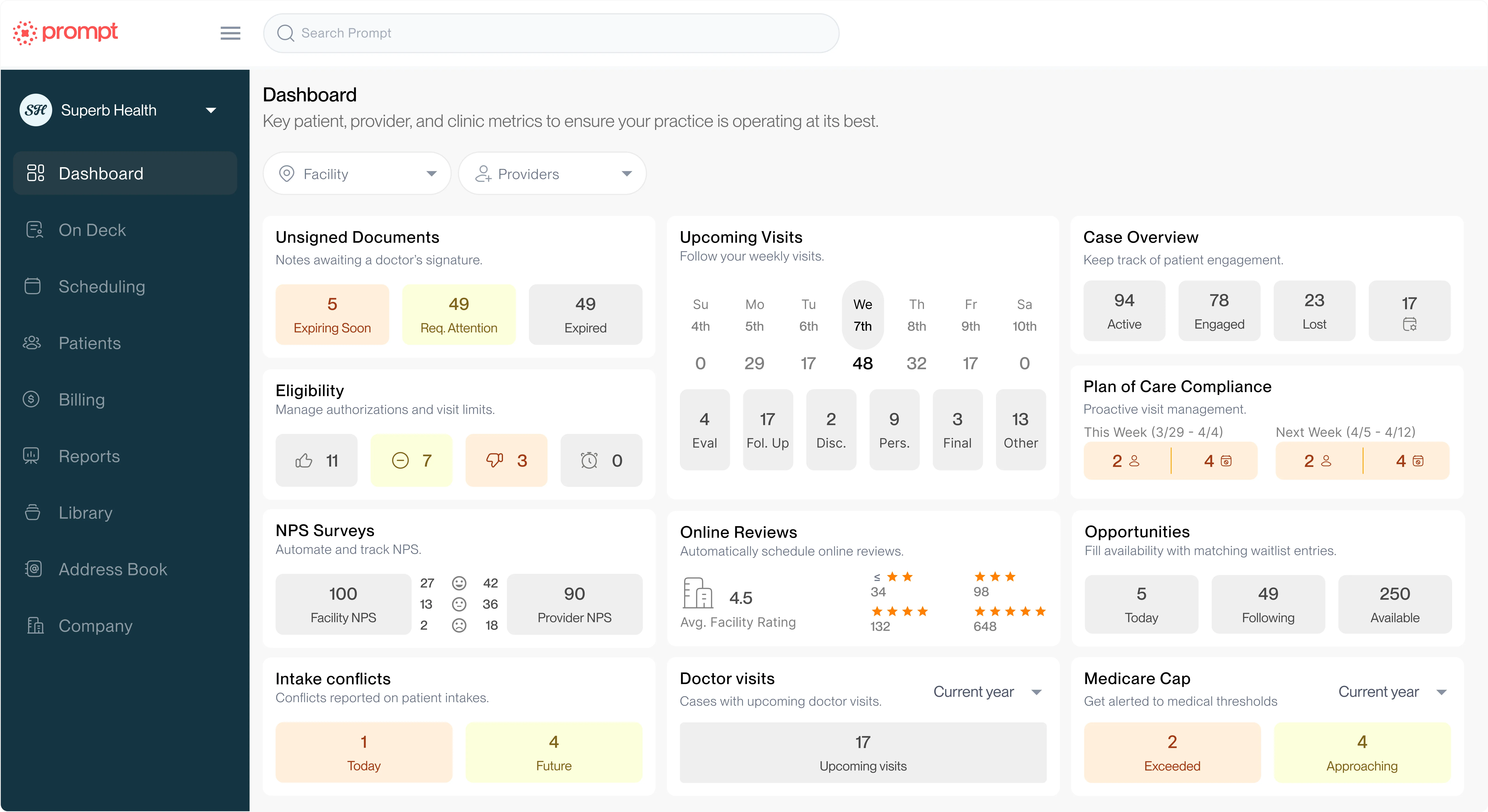
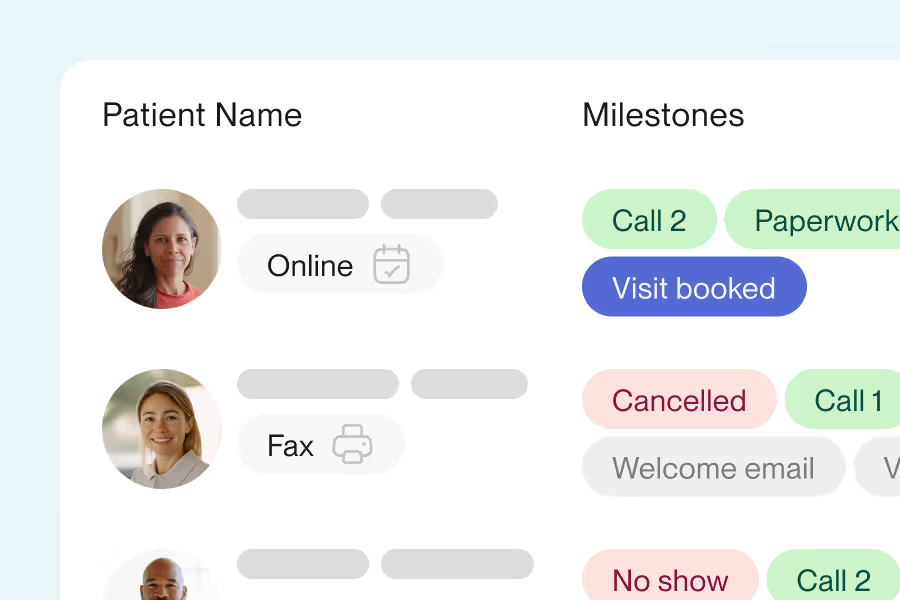
High-growth practices adopt digital intake and self-service workflows so patients can complete forms before they arrive. That reduces paperwork at the desk and gives clinicians better context before the first visit.
Instead of flipping through forms mid-session, clinicians start informed.
Patients feel:
- Known
- Expected
- Prepared for
That doesn’t feel robotic. It feels organized.
3. They automate documentation support, not clinical judgment
Documentation is one of the biggest friction points in rehab therapy. According to APTA's 2025 Administrative Burden Report, 91% of physical therapists agree that administrative burden contributes to burnout, with documentation requirements among the most consistently cited causes.
When notes are finished late at night, clinicians lose time and energy. Revenue slows because claims can’t move forward.
Clinicians supported by AI-powered scribing complete documentation more than a full day sooner on average.
That means:
- Fewer late-night sign-offs
- Claims submitted within 24 hours
- Payments landing in under 17 days on average
Automation here doesn’t replace clinical reasoning. It removes repeat manual work so clinicians can focus on patients, not formatting.
4. They automate plan-of-care follow-through
The patient journey doesn’t end after the first few visits.
Nearly half of high-growth practices use automated reminders and plan-of-care tracking to identify underbooked patients and prompt follow-up.
That improves:
- Adherence
- Visit consistency
- Revenue stability
More importantly, it signals attentiveness.
Consistent follow-up shows patients their care plan matters.
5. They automate the handoffs behind the scenes
Patients rarely see what happens between documentation and payment.
But they feel the effects of friction.
High-growth practices automate the path from visit to claim so clean claims move out quickly. Connected systems reduce duplicate data entry and surface issues before submission.
Fewer manual touches mean:
- Less billing rework
- Fewer delays
- More predictable cash flow
When the back office runs smoothly, the patient experience feels smoother, too.
Automation increases the human touch
When clinicians aren’t:
- Chasing paperwork
- Re-entering data
- Cleaning up billing errors
- Finishing notes at 9 p.m.
They’re more present. More focused. More human.
Automation doesn’t remove connection.
It protects it.
If you want to see how high-growth practices design systems that support both efficiency and empathy, explore the full 2026 Practice Growth Index.


.jpg)

.png)