





.png)
Transcript
Marla: [00:00:00] Welcome back to the Practice Growth podcast, where we have a very special guest today. Sean Loran, it's a pleasure to have you.
Sean: Thank you. Appreciate that.
Marla: And you have scaled really quickly from zero to five clinics, um, setting your sights on 100, so you are not done yet.
Sean: Yeah.
Marla: And you've done it a little differently than most.
You have a relentless focus on people, culture, and where most clinics out there I've heard lately are saying it's so hard to find clinicians to grow and recruit, you're out there telling me, "Oh my gosh, we have an influx, and I have to say no, um, and I get to hire the top 1%." So that's what I can't wait to hear more about.
Sean: Yeah. It's great. It's, it's been an exciting journey so far.
Marla: Yes. And I, I want to start, just give me a little background about how you got into the position you are today in terms of owning a practice and, and scaling a practice and, and what led you to wanting to own your own practice.
Sean: Yeah. I mean, it's always the ultimate question, right?
Is like, why, why the journey into entrepreneurship? And I often reflect on it and it's, it's, it's not easy to be a clinic owner or an entrepreneur, and, uh, it's a humbling experience for sure, you know? But I, my personality, I- I'm a driver, and I like to push, and I like to change, and I, I knew that I was never really gonna fit into somebody else's model.
I had to create, create my own way, and, uh, that's what Concierge is, my version of how I see PT, you know, in the next century [00:01:30] really being done.
Marla: And I, I've heard from many clinicians and practice owners around your area saying it is a different model. It is almost like the modern PT clinic of the future, let's call it.
Um, so we'd love to hear a little bit about what separates your clinic from the rest, um, and then we'll go into what attracts clinicians to you.
Sean: Yeah. It's interesting. You know, we, uh, you talk about competitive advantage, right? And like how are we different? And, you know, the joke of PPS is every, every year there's one talk that's like, "I went through all your websites and it all says we offer exceptional care.
We..." You know, hands-on service, one-on-one, you know, manual therapy, whatever. And really, I think, Marla, what separates us is like a relentless pursuit of the details, you know? And holding our staff accountable to the details, right? So 1% better is sort of a motto in our culture, and, you know, to me, that looks like listening to a podcast on the way to work, or listening to an audiobook in downtime or, you know, at night just reflecting for five minutes, you know, when you wrap up the day.
Take, take a journal and just write like, "Hey, what went well today?" You know, what positive things happened to me, right? To shape your day for the next day. Um, and just, I, I think that the piece that's missing- You know, for most, at least it was for me early on was, or maybe I did reflect, but the reflection piece, like what went well this week, you know, what good things happened to me this week, and where are we going next week?
What are our top three to five priorities, right? [00:03:00] Staying focused, that's the hardest. It's really difficult when you're trying to put out fires, especially early on in business. Like something failed, well, I have to immediately fix it, right? So figuring out what's important and sticking to fixing those things versus focusing on the urgent, you know?
And I think that's where, you know, I don't know how we originally got to this, but, you know, the differentiator is really like Our focus on, on being 1% better every day, you know. And I think I call our clinics like the Ritz- Ritz Carlton of PT clinics, you know. It's... They're definitely beautiful clinics.
You walk in, we've got, um, technology that's probably a little bit different than other PT clinics around the area. Um, we invest in golf simulators, which is, again, an, an attraction for PTs who are golfers. Um, and it's not just any golf. It's TrackMan. It's the latest and greatest. So just different things.
And in each clinic, Marla, has its own culture too, right? Like a different team, different culture, but, uh, we've rolled out, in partnership with Lead 'Em Up, really a cultural framework and a vernacular. It's called a red, green, and gray framework, and, uh, that's been a, a tremendous sort of addition to... I mean, really, it's created a culture, which, uh, which is pretty cool.
Marla: And, uh, lot- lots of good tips there, and I'm gonna have to dive back into that culture framework, uh, that you are doing. Um, but before that, you know, you, you did say it's sort of a very different look and feel. You've got the, the best and the greatest. Um, and I'd love to know how that contributes or what you think really [00:04:30] contributes to how you are recruiting and able to recruit therapists easily, get them in the door, um, and, and retain them.
And I know we were just talking earlier today and you said you just hired nine people quickly in September and, and got them up and running. And, uh, a lot of clinicians would be like, "Where did you find those nine people?"
Sean: You know, and, and what's, what's crazy is that we probably interviewed 40, you know, to find those nine people.
Wow. And, you know, w- what's, what's amazing about hiring is that the more A people that you hire, they attract more A players. You know, it's just, it's just a fact, right? So when you have an A team, people wanna be on that team. It like, it drives the excellence, which is one of our core values. And the B players, you can almost tell right away, like you can tell in an interview.
We've sort of honed in on our interview process, too. Like we've standardized that. We have multiple people in the interviews now because again, like, you know, we've been in business for since really for about seven years now, and early on, like you like somebody, you're hired, right? So like Marla, like we have a great conversation, you know, I think you can do the job as a PT, you have a license, like great, let's get going, right?
But we didn't ask, you know, some of the more difficult questions, which, um, you know, again, or have people observe, like that's another piece, right? Like do they even know what our flow is like, right? And then if they get in, we've had people come in and, you know, observe and say, "Well, yeah, this is great." And some people are like, "Oh, it's too...
You know, this is gonna be too much for me," right? Or it's... 'Cause we, we expect a lot of our [00:06:00] staff, you know. Um, we expect them to, you know, to bring their A game every day, you know, and to... I don't work like- It's not a company where you go to and you can coast. Like, coasters will, will f- see their, see their way out the door, you know?
And that's when we talk about like the top, I want the top 5% of performers. Um, it's not realistic to think that everybody's in the top 1% of the 1% of PT performers, right? And that's not just productivity based, right? It's- Right ... you know, are you taking students? Are you a, can you be a clinical mentor? Are you a great teammate, right?
Um, all those things matter. It's like how people fit into teams. And then we talked a little bit about DiSC personality profiling and, you know, we use that to put together our teams too.
Marla: That's really, that's really neat- Yeah ... is you're really proactively strategizing and asking the right questions and saying no more than you say yes.
Yeah. Being picky, which I, I've heard, you know, "I just need a warm body. I just need to grow," right? So love to hear a little bit about maybe your interview process and some of those, uh, maybe three tips of questions that you're like, these are some key ones to, to ask.
Sean: You know what's funny, Marla, is it- i- so we've revamped the interview process a hundred different ways.
I don't do the PT interviews anymore, um, but I, I do think that, you know, it's easy for somebody to get through an interview like relatively, you know, if you like somebody and, and, um, you know, they can prepare for any question that you ask them, right? But what they can't prepare [00:07:30] for is, you know, how do you observe and interact with people when you're on the floor, right?
So one thing that I like used to do when I was interviewing P- PTs was I would show up, you know, I'd be in my office, I'd let them sit in the waiting room for 10 minutes, and I'd ask the front desk, "How did they act? Were they fidgety? Were they on their phone? Do they, were they staring at, you know, were they staring at their phone- Disengage
the entire time? Did they, you know, were they interacting with people," right? Like, those are things when people aren't, don't think that they're being watched, that's kind of, you can get some valuable information out of that.
Marla: That's really great. That's a, that's a great suggestion.
Sean: And then just observing.
You know, I've had, we've had everybody just stay and observe after an interview for, you know, 30 minutes or so, and that, it's an opportunity for them to ask the staff that's currently with us like, "Hey, how do you like your job?" You know, we tell people like, "Ask our staff whether you like to work here or not."
Like, I think that's a, that's an important thing, right? So, um, ask, you know, ask the staff any questions like, "What's the workflow here?" You know, "How many patients an hour do you see? Do you double book?" Like do you, are you, is it, you know, "What is your schedule like on a day-to-day basis?" Those are all good questions that, you know, a prospective PT hire should be asking, you know, our current PTs.
Marla: Yep.
Sean: You know? Um- So it's good. So in terms of interview interview questions specifically, it- it's so hard because again, like people can just like fake their way through an interview and we, like, it happens, it's happened definitely to me early on that people have gotten inter- through interviews and, and again, another thing that we've done is we have people, we do panel interviews now, so we have multiple people in [00:09:00] on the interview instead of just one person.
Uh, 'cause it's hard to f- it's hard to fool three or four people 'cause they might see something or hear something that you didn't. Um, so I think that's definitely helped with our success in hiring recently too.
Marla: Well, I, I love the observation part too, 'cause I, I do think that you get a true u- unique sense of how that person interacts with others, which is a big part of the industry we're in, in healthcare and helping people.
So, uh, love that tip. So
Sean: now that t- that little trick is out the door 'cause it's, it's public knowledge now. That's okay. Well, that's okay. I'll share with you guys.
Marla: Um, another question though is how do you get those 40 people? So what, what platforms are you using or, um, is it just word of mouth? Like how do you get those, those different people to even apply?
Sean: Yeah, I think it's a great question. You know, we use all the classics like LinkedIn messaging, we use, um, Indeed. Obviously we hire students, right? So like developing student relationships, uh, with relationships with universities is really big for us.
Marla: Sure.
Sean: Honestly, our students are our best hires because they understand, you know, they understand the business, they understand the flow.
Uh, typically when they wanna come work for us, that's a, that's a great thing. It means they had a good, good student experience and, and honestly from a training perspective, they get ramped up so much faster because they already know Prompt, right? Um, and they know the clinic and they know the p- some of the patients are the same, right?
So, uh, I, I would say that probably student, student relationships and follow through, follow up, and then university contracts. So we, you [00:10:30] know, we take students from all around the country now, and we recruit nationally. You know, so we offer relocation bonuses, we offer, um... We don't offer housing yet, but that's something we're looking into.
Um, but we just give it in terms of a relocation bonus. But I think we paid out five or six relo bo- uh, relocation bonuses recently just to, 'cause people need to, you know, if you're gonna recruit nationally, you have to, you know, they need someplace to live, so, uh-
Marla: And Massachusetts is a great
Sean: place to live, so It is a pretty good place to live, but I'm biased.
Marla: Yeah. And how many students do you take a year per clinic?
Sean: So, great question. So we've got five clinics currently. So each clinic- We probably do 15 to 20 students a year.
Marla: That's great.
Sean: Um, or I think that's what we have on the docket this year. You know, we try to give clinicians a little bit of a break, you know, 'cause some PTs, you know, you get back to back to back students, um, and it can be a lot, right?
'Cause you wanna give, you wanna give it your all, uh, as a, as a CI. But, uh, you know, w- we like to pair like alma mater to, you know, to the PT. Like s- you know, so we have Springfield College w- we have a really nice relationship with, and same thing with Northeastern. Um, we pair, we like to pair the alums with the students because they know the program.
Mm-hmm. Right? So they know the faculty, they know the, typically the, you know, clinical education directors. And, um, I just think that it, it, it bodes for a better experience when you've been through the program yourself and you know. Like, I went to [00:12:00] Northeastern, so I know where Northeastern students should be, you know, by their first rotation, right?
Mm. Like, we've got some rot- we've got some clinical partners that they do their first clinical education or clinical experience early on, right? And it's before they've had all their didactic information, and it's just, it's hard for them to get a great experience because maybe they didn't have spine or they didn't have extremities.
So when you pair, like UMass Lowell does that, U- UMass Lowell does it a little bit differently. And, um, so what we do is we partner with, you know, a PT that went to UMass Lowell so they understand the program and they understand, you know, how to kind of best train that PT.
Marla: And I think those first years all the way through those third years are absolutely, if they have a good experience, they'll, they'll come back and work for you.
So it's very, very valuable gold for those students- Yeah ... to see the insight into your clinic and the workings and the culture.
Sean: Yeah. So we've really looked at that program, our student program, in tr- our student training with intention. You know, we've really tried to be super intentional of, about how they're ramped up, about the education they get.
Um, you know, they get, um, invited to our, you know, our q- our orientations, like our new hire orientation, so they get to learn about the company. You know, we educate them on our cultural framework, the green team, and, uh, we've really put a lot of effort into making our onboarding process really, really smooth.
Marla: And students is just one way, like you said, you've got them coming from all over, and you mentioned the cultural framework. So would love to dive into that because I do think you're getting a ton of word [00:13:30] of mouth as well, just because you've been intentional about how you train not only your students, but your clinicians after they come.
So tell me a little bit about the onboarding, the training you've implemented that not only attracts but then retains them.
Sean: Yeah. So, and I think the retention is key, right? Because there is, uh, there's probably a dollar figure, but it's, it's gotta be upwards of $50,000 plus to, you know, to lose, uh, somebody who you just hired within a year, right?
Marla: Uh, 50 to 100, you know? I, I really...
Sean: Yeah Crazy amounts of money. You know, and, um, so what we do, we do a couple different things, but we, that first 90 days is really structured, right? So the onboarding process, depending on where they are, like if they're a new grad, we really, again, are intentional about how many patients they're seeing for the first 90 days, right?
Because the last thing we need is somebody who, you know, is treating, you know, 50 or 60 visits a week at week four just because the clinic needs it, but they're not clinically ready to do that and offer that, you know, real CPT experience, right? So again, I just go back to the experience, right? So what I, I always say this kind of like to, to my staff and to my leaders is, you know, if I meet somebody in the grocery store, and I don't know them from a hole in the wall, but they see me and they see my face, they're like, "Hey, you own Concierge," right?
And they say, you know, it, it's bonus points if they get the PT's name right Right ... right? 'Cause half the time they just, they, they forget or they make it up. Um, sorry guys, but it's, it's true. And, uh, but they'll say, "Listen, I had a great experience at your facility." Right? That mean, that is gold to me because that means we paid [00:15:00] attention to how the place looked, how it smelled, right?
Paid attention to the five senses, right? Or did they get a real, a true like luxury experience when they came in? And honestly, that starts with the front desk. Was the front... Like, were they having a bad day? Were they, you know, kind of groggy? Did they, you know, did they, or did they use that person's first name, stand up when they, when they saw them, smile, "Hi, Darcy.
How are you? Nice to see you. You know, welcome back." Right? Those sort of things. Um, we've scripted some things. You know, we've really We've just, again, put a lot into the training. So that first 90 days for new clinicians is really structured. So they get a lot of, you know, it, it's an in-person-- We do a full day of in per- in-person orientation with all new hires, and then we do...
You know, they're obviously paired with a mentor. That's a structured process where they check in with that mentor once a week. Um, where possible, they also have success partners, right? So it's not just their mentor, who might be a clinic director, but it's somebody who's maybe not ti- like, doing their performance review, right?
So, like, somebody who they can say, "Hey, like, how do I do this in Prompt?" Maybe they don't feel comfortable, you know, going to a clinic director for the 10th time in a, in a day, right? Um, so that's something that we kind of have recently implemented for new hires. And, uh, you know, other things we do, we do quarterly, we do an advanced orthopedic seminar.
Uh, so that's where actually we got it at, on Halloween. And, uh, so I actually teach that with one of my clinic directors. So we kind of... I rotate which clinic directors are specialists. But what I've noticed is [00:16:30] We, again, operate, I like to feel like at a, at a different level of concierge. And all training really needs to come from the top in my opinion.
So, you know, what our advanced ortho seminars are, are really like what I learned from manual therapy and sharing it with our new staff. So we kind of basically have to clear their schedule for the day. They come in and we just, we have four of those modules a year and it's like lumbar spine, pelvis, lower extremity, upper extremity, and then neck and T-spine.
Marla: And you've created all the training and coaching modules yourself, right? Like I know you said you have training for the onboarding, but then you also have very, very structured and outlined training to just become an advanced clinician, a c- a clinic director, and even now you're doing the area director and beyond.
Sean: Yeah. So that's a totally different training program. Okay. So we've got... So really what we've done the last two or three years, Marla, is put an incredible amount of resources and, and, and capital into developing really like a proprietary training program. Like it's, it's really pretty cool. And so what we've developed is really an internal leadership academy, right?
So we're developing, uh, team leads, we're developing clinic directors, we're developing area managers, and eventually we're gonna be developing C-suite level leaders. Uh, so it's pretty cool. We work in partnership with 8150 and, uh, they've done a great job for us of helping us develop those modules and honestly like working with us to, to run those small group [00:18:00] cohorts.
But every new hire gets a foundational level of leadership training, right? So and, and really what it starts with is like disc personality profiling. It starts with, um, how to have difficult conversations, right? Because we were never taught that in school. Yeah. They can't, they can only teach you so much, right?
Um, so it really fills in a lot of the... And again, you just reverse engineer from the experience. If I wanna offer a Ritz Carlton experience, I need Ritz Carlton level
Marla: training. Training. Yep.
Sean: Period. So again, we just poured a, a bunch of time and resources and, you know, into, into the training and into that leadership academy.
So it's really paid off in spades and, you know, again, we're developing our, our leaders to open up more clinics, right? So ideally, you know, as people grow through their training they get d- they get the opportunities, right? So I wanna open up a new clinic. Well, I'm gonna put a clinic director who's been through the training, knows how to have the difficult conversations, you know, knows, knows about things like imposter syndrome, knows about things like, um- You know, how to keep a culture green.
You know, how to celebrate wins, right? Like, these are things that you just don't learn in PT school or, you know, if you're busy practicing, it's just tough to think about.
Marla: Yeah. You know? It's taking the time intentionally to teach that and learn that.
Sean: Yeah.
Marla: And like you just said, you don't just stick somebody into a new one 'cause you need a new clinic to open.
You train someone and then open the clinic before that person. So,
Sean: yeah, that's funny, 'cause I was talking to, um, Dan Ruedenberg a couple months ago on Spear PT, uh, around here, and I think they've got, like, 60 of something- Yes.
Marla: Love, love Dan and his team ...
Sean: so they, we were talking about that, and he said, "Sean, every single one of my clinics is home, or [00:19:30] clinic directors is home grown."
And, you know, we've hired people from outside, and 90% of the time it doesn't work out when we put them in leadership roles right away because they've kind of already have bad habits or they don't do things the way that we need them to do them. Yeah. And so what we've learned is you know, when we hire from the outside, they train as PTs first, and then we give them the training.
Um, and it might be a little humbling if somebody came as a clinic director into a PT role, right? Like, that's can be humbling, but you know, they know where they're going, you know? Um, but I think it's really important to, to do the job of PT before you become a leader because then you can empathize with the PTs.
You
Marla: know? And then you really are training everyone the exact same way. You have... A- and you know you're getting the culture and creating it that you wanted because those leaders help bring your culture all the way down. So, uh, great that, that you're doing that. And I, and I also love that you did it proprietary, but invested and knew you wanted to invest to bring in another group to help you do it.
Sean: Right.
Marla: Because we don't know everything. We're, we're learning, right? You have to learn on the job, too.
Sean: And they're experts, you know, honestly, Marla, and quite frankly, our staff will share things with an outs- you know, an outside resource more so than they would sh- or, like, they'll be... just be more honest with, with somebody who's not necessarily their, writing their performance review.
And we want that. I want people to have some sort of, you know, a, a mentor that doesn't necessarily, again, isn't doing their performance reviews, 'cause they'll be more honest with them, I would hope, you know?
Marla: [00:21:00] So-
Sean: Vulnerable-
Marla: Yeah ...
Sean: would be the word.
Marla: Yeah. So, so in your recruiting, you've got your beautiful clinics.
Like you said, it's spa-like. It's called Con- Concierge for a reason. Yeah.
Sean: Sure.
Marla: Um, you've got all the fun equipment, the bells and whistles, which just helps attract people to say, "This is different."
Sean: Yeah.
Marla: Um, then you've got the training program, like you said, which is very much intentional. You are making sure everyone gets trained the way you want it, and you're investing in education and training.
Sean: Oh, yeah.
Marla: And then I would like to ask about technology, 'cause I know you also, um, do it differently and, and really adopt all the biggest and best technology as well.
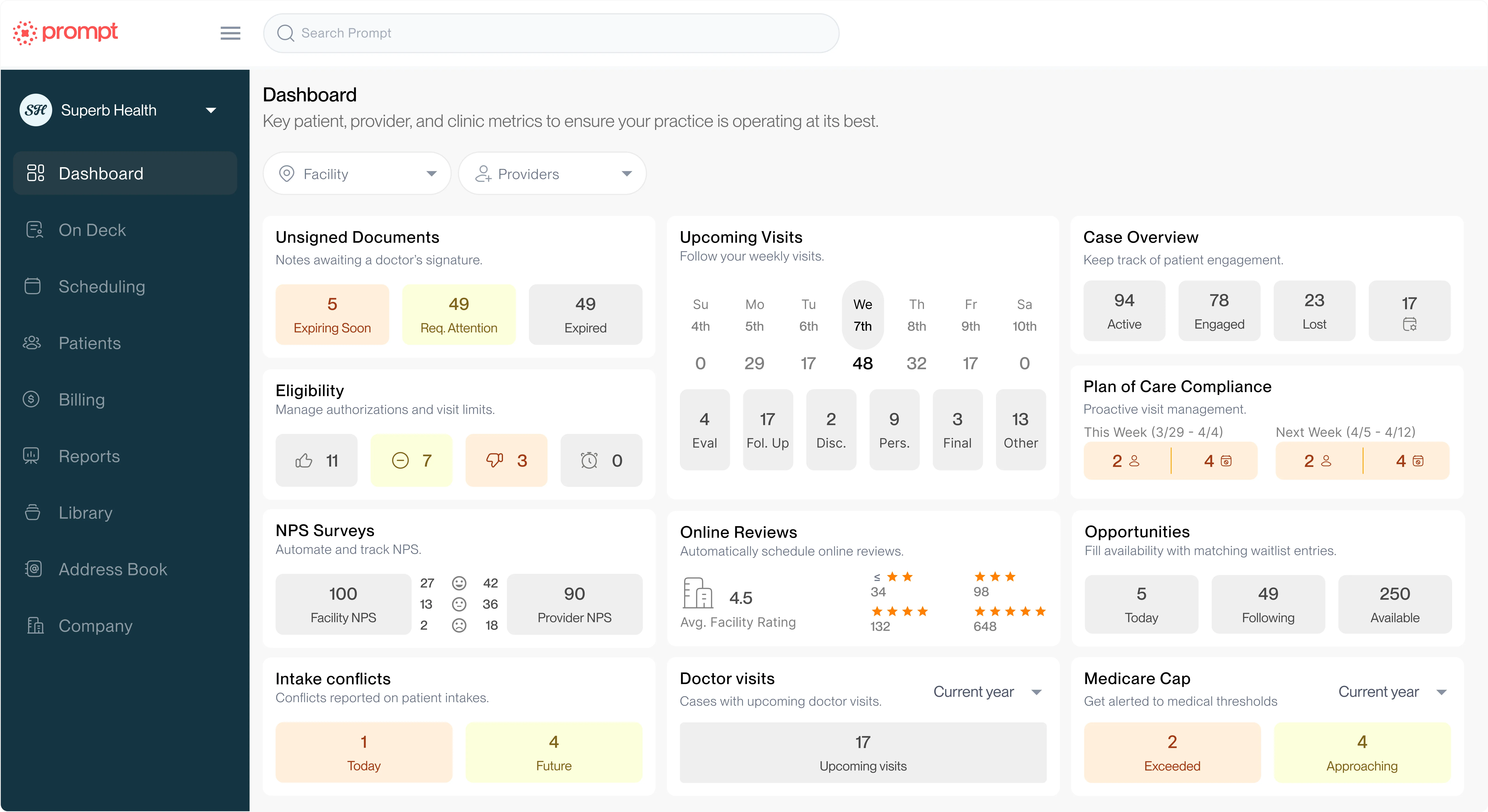
Sean: Yeah, so Prompt. Honestly, the switch to Prompt has been great for us. We-- And I love how you guys are constantly, you know, evolving and, you know, getting better, and you honestly listen to the feedback from, from clinic owners or from clinicians, which is pretty cool.
We didn't get that in the past, so that's pretty neat. You put in a ticket, and something actually gets done or it gets built if it's a good idea. Um, so that's pretty good. So Prompt has really helped with... I feel as though it's helped with provider efficiency, you know? So they're not taking as, taking home as many notes.
Um, the daily d- like, the daily documentation is so much easier than it was before with all the different tabs. So I mean, Prompt is a big part of our technology stack, you know? And then we use... You know, I, I look at technology two different ways, right? 'Cause we have the technology that we use to kind of train our staff, like Trainual.
We use Trainual for training the staff. And, um, you know, ChatGPT obviously is, is an important resource, um, for us. Uh, use it in many different ways, but it really helps kind of like- It [00:22:30] helps our clinicians, a- and especially our leaders, think through agendas and thought processes. Uh, so it's kind of a cool resource to use.
Uh, and then technology in the clinics, you know, we've got Shockwave machines, we've got Trackman golf simulators. We've got, um, you know, AlterG treadmills. You know, just the kind of the latest and, and different things that just separate us from the norm, you know? Do they, do they ca- are they cash flow positive?
Probably not, you know? But I think that... I mean, Shockwave is incredible, you know? It's, it, it fixes tendonitis. It's unbelievable. Um, I do find that, that staff can sometimes feel weird about, like, the price point, you know, 'cause it's, it's an expensive service, but the machines are, are expensive, you know? Um, so we're trying to figure out a way to make them more accessible to, to all of our patients so that it's not, you know, $450 every time you, you need it, you know?
Marla: Yeah. '
Sean: Cause that's, and we should talk about that too. So that was an import- I didn't take insurance when I first started concierge. So I used to, I started as a real concierge practice in the Seaport of Boston. I would go to people's homes, or they'd come to my gym in, in the Seaport where I lived in my building, and I would train them, and it was, you know, cash, fee for service.
We moved to the suburbs in like 2017, and so I opened up concierge in the first physical location in 2018. And I really wanted Marla to be a community partner, right, which to me means taking insurance, right?
Marla: Insurance,
Sean: yeah. And the first question that I would always get, you know, when I would do concierge visits was, "Do, will you take my insurance?"
Right? And the answer was no because like, you know, you [00:24:00] need to really, it's, it's complicated, right? And y- as you know, like, the revenue cycle management for when dealing with insurance companies can get tricky. Um, so yeah, so, you know, when I opened our first physical location, that's when we decided to, to take insurance and, and to really be a partner, you know, in our, in our community, right?
Um, so that matters. And, and, and again, you know, I s- I see, I see a lot of companies shifting, you know, either doing a hybrid or trying to shift away from the insurance model, and that would be incredible. I just feel as though when we're working with our communi- like, with our community, you have to do your best to at least work with the payer for a rate increase before you say, "Hey," you know, "sayonara."
Marla: Yeah.
Sean: But that said, these payers, some of these payers, it's just they're paying way below our actual cost to offer a visit.
Marla: Or what we're worth, right?
Sean: Well, way below what we're worth. Right? So I mean, we can have that conversation, but, you know, PT should be getting $150 a visit, period. And nobody talks about that.
You know, nobody talks about, you know, some, there are two payers, Harvard Pilgrim and Tufts, that are $20 below our cost to actually provide the treatment. And so eventually, and they won't even pick up the phone. Yeah. Right? Like, you call and they're like, "Yeah, we're, we're good. Like, that's our contracted rate."
And, you know, it's, it's just, that's, that's Tufts, you know? And I think eventually providers are gonna ha- s- you know, we're just gonna say we've had enough and say sayonara, but I think, you know, it's just a difficult, it's a difficult topic. Nobody [00:25:30] really wants to talk about it. And then it's the hospitals too.
The hospitals get paid triple what we get paid in outpatient. Like, you s- you go to a hospital, your bill will be three times what it is- You know, in an outpatient PT clinic, at least in Massachusetts
Marla: And, and that's why it is so important to be able to offer all these different types of resources when you're recruiting clinicians, because pay isn't always the only thing, 'cause you can only extend so much sometimes with what you're getting from the insurance.
Yeah. Um, so I, I do love to hear that you kind of say, "Okay, these are the different things I'm putting out there into the ecosystem to know that I'm, I'm attracting therapists and clinicians to wanna work here." It's not just the sign-on bonus, the, um, fee to move or the Yeah.
Sean: Well, it's funny, you know, a- and we, you know, we do sign-on bonuses, but, you know, sometimes it's like, you know, a- and I'll tell this to all the new grads, it's like you, if you see a large sign-on bonus, just ask why, right?
And usually it's because they need a warm body, right? So we'll do sign-on bonuses when it really for relocation purposes. Like, we're not doing sign-on bonuses just to, like, hire, because to me it's, you know, to me it's just, like, a desperation move. Um, but we do pay in the top 1%, you know? So I want the top 1% of performance, we pay in the top 1%, you know?
And then PTs are eligible for... We have bonus programs, bonus structures, they can make more money as well, if they want to be busier.
Marla: Perfect. Great. And, and, and that's, it- like you said, you wanna pay for what you get- Yeah ... and you also wanna offer to your patients what you want them to get, right?
Sean: [00:27:00] Right. It, you know, and it's, it's always balance, right?
Because, um, that's great if a provider is, is meeting all their productivity, you know, bonuses and everything like that, which means more patients seen. But are they doing it in a, you know, in an ex- like, you know, living through excellence and customer service, which are two, two of our core values.
Marla: So tell me what a ad would be that you're putting out there for a job description, um, that helps attract people to come to you.
Sean: Yeah. I just, to me it's the word exceptional, right? So exceptional care, exceptional spaces, exceptional people, right? And it's funny, we have a billboard, like, on the highway that literally says exceptional, right? 'Cause that's the difference, right? It's, you know, when we look at, like, let's say it's an Indeed job board, right?
I want somebody who wants to be great, you know? I want some- that person will fit in with our culture just f- just fine, you know? I think somebody who, um- And it's hard because it's hard for me to even conceptualize getting a doctorate in PT and not wanting to be great, 'cause I feel like everybody says they want to be.
But it's hard to show up every day and intentionally improve by 1%. It is. And it's so easy to coast, right? It's so easy to coast. But we've released, you know, plenty of those folks that just, that do coast, you know, because they, they're the ones that drag your MPS down, right? Yeah. Um, or, you know, again, like I've been doing this a long time as, as have you, right?
So like, there's sometimes there's those people that are just jerks, right? Like, [00:28:30] and I've hired them and I've fired them, you know? And, and sometimes you're in a spot where you, where you can't make that move and it always bites you in the, in the butt later, right? Like it always bites you in the butt. Like, you know you should've gotten rid of that person or released them, we call it releasing them, way sooner, but keeping them just because you needed a warm body is always the wrong move And I, I'm gonna listen to this podcast later and I'm gonna, I'm gonna hear that advice of me saying that, and it's, it's the true- it's the truest thing, you know, I think out there for hiring, is just as important as, as it is to hire the right people is to also release the people that are, they're toxifying your culture.
Marla: And especially because that's your motto is having the top 1%, 5% in there. So in order to do that, you have to continue to breed that and you have to weed out what is not working towards that mission and goal.
Sean: Yeah. And the, and the company too today is, you know, the company's way different than what, what it was seven years ago, you know?
And I think we've got a green culture. We have a, a frame of reference to, to, to know when people are drifting into the gray or into the red, you know, that's w- how we call it. Um, disengagement, you know, active, you know, if they're actively, you know, they're just not participating in, you know, in the, the day-to-day activities that they should be, right?
Um, and we have kind of a framework to not only recognize that, but also to take action of, to bring them back into the green, you know?
Marla: Great.
Sean: So it's interesting.
Marla: Great. And hopefully reducing burnout with all of the different things you're doing, because I do think that autonomy, mastery, and skill, [00:30:00] um, allows people to actually continue excel.
Could be still a lot of busyness and they could still be in the clinic seeing a ton of, not a ton of patients, but just being busy with patients. But if they have that ability to be striving for something else, then it doesn't seem like hard work. It seems like fun work.
Sean: And what's beautiful at, like with our company is that every single person that we hire has the opportunity to, to basically run their own clinic someday, right?
'Cause we're opening... I wanna open up 100 clinics, you know. I said 10 clinics in 10 years. Of course, that's my goal. I got three more, three more years to do it. Um, and I wanna prove that, you know, to myself before we go to, go to 100. But we have the, again, we've got the, the training program in place to develop people, which is just, I mean, that's pretty cool.
So-
Marla: So it sounds like you've got the training program, the processes, the technology infrastructure. Now you just need to go.
Sean: Now we just need to go. You know, rubber, rubber meets the road. So, you know, there's, there's a lot of different things in our future, um, that I see. But I would love also to give, you know, our very best operators the opportunity to, to maybe franchise ConciergePT someday, right?
Or own a franchise that they can have, they can share in the upside of ownership when treating it like an owner, right? So I think a lot of our clinic directors right now, we've got gr- a great team, uh, and they do truly treat those clinics as their, as their babies. They treat it, they see it through an owner's lens, and that's been cultivated, right?
Um- But I think as, as we grow as a company, you know, I'd love to kind of be able to offer that opportunity at some point.
Marla: I mean, that's a great way to grow because [00:31:30] like you said, it'll give them... You've done the training, you've got the culture, and then once they get to that clinic director, you say, "Okay, now do you want to franchise and own your own?
Here you go. I've given you the keys and the tools." Yeah. And then they can continue to excel and not have that roof of, of, you know, where do I go from here?
Sean: Yeah, or the income roof, right? And that's, that's, you know... And again, we talk about my journey, right? Is that like your- you have an income roof, right, as a PT, and nobody wants to talk about it, but it, but it is.
It's based on the insurance reimbursement, right? Um, unless you get involved in really in a company like ours that's rapidly growing and scaling, um, you know, you could become an area manager, which makes way more money than a clinic director, which ma- makes more money than a p- team lead, which, you know, it's like, it kind of, it's a, it's a, a process.
But I think that we've got to figure out a way as outpatient owners, clinic owners to, to be able to, to pay our PTs what they're worth, you know? And to me, that number is at least $150,000 a year, you know, is what PTs should be the base of what they're making. You know, I look at the market nowadays, and even two PTs together, right, it's hard to buy a house.
Yeah. Like, that's incredible. You have doctorate level education, you can't buy a house in Massachusetts, and something's gotta be done about that. You know? And I don't think housing prices are going down anytime soon, so
Marla: Oh, they are not.
Sean: You know.
Marla: Well, I, I love that you're putting that model and you're almost training people to be able to do that.
You're like an incubator in that sense of- Yeah ... hey, you've gone through my training, gone through our process-
Sean: Yeah ...
Marla: developed a clinic. You can [00:33:00] franchise and own your own one day.
Sean: Yeah. A- and I think that's, that's really the difference that people get when they come to us, right? So everybody gets that foundational level of leadership, but then, you know, the next levels, so the team lead is sort of like an assistant clinic director.
You can do that within your first year as a PT at Concierge, right? So, like, you could go through the foundations training, which is three to six months, and then, you know, if we notice that you're a top performer, you know, and that you're asking- always asking for more duties or, you know, you're doing a great job, we're gonna tap you to be that team lead, right?
And then you get that training, right? Then you do an excellent job at that role, right? And then you, you know, the clinic director moves on to open up a new clinic maybe, or maybe we're- we open up a clinic with, with the team lead because they've done such a great job, and we're opening up a clinic down the street from their house.
We'll give them the opportunity, you know? So, but a lot of it starts with, you know, finding the right people who wanna grow and who wanna be great, you know? Or have an entrepreneurial spirit. Yeah. You know? Or if they don't have the risk tolerance of an entrepreneur, an entrepreneurial spirit.
Marla: Perfect. Yeah.
That, that's a great way to look at it. And like you said, finding the right people. You are not only... You're, you're focusing on finding the right people, well, attracting the right people, hiring the right people, growing the right people, and then that's how you get to grow and help your community further.
Sean: Yeah, and I think it's, you know, I think it's important to, you know, to talk about too, like, you know, the entrepreneurial journey isn't for everybody, you know? I didn't take a salary from the business for three years, right? So I- that means I didn't get paid, for people who are listening. It's
Marla: not easy.
Sean: I put every [00:34:30] single cent back into the company, you know?
I took it, you know... A- and you have to. If you're gonna grow and scale fast, like you have no other choice. Like, you know, you throw m- money at marketing and sometimes, you know, you have no idea if it's gonna work and, um, but that's the... Like it's, it's... There's a lot of risk. There's still always risk because, you know, as you scale at the pace that we're scaling, you know, you need good capital partners like the bank, right?
Because you're taking a lot of the money that the good clinics are making and putting it into the, the de novo clinics or new clinics. So- I don't think the PTs realize, you know, and, and it's okay for them not to, but like, you know, you can be hundreds of thousands of dollars in debt after one year of opening up a de novo clinic, and that's normal because you have to pay salaries and you're not seeing the visits yet.
Um, so I think it's important to develop both tracks. You know, a track for people who wanna be leaders within the company and don't have that risk tolerance, um, and a track also for entrepreneurs.
Marla: So you didn't have this training 'cause you developed it for others. Yeah. So how did you get to where you are?
Maybe what books, mentors, podcasts that you felt really influenced you to get to this top 1% where you can, you can create others in the top 1%?
Sean: Yeah. Great question, Marla. I think I'm always learning. You know, that's number one. Uh, I think in terms of books, you know, I think of Gino Wickman. I like Traction.
That's a good book. You know, just, I, I like the, uh, what's it you're... I, I, I'm sure I had all these written down at some point before this, but there's a book about, um, oh my goodness, I got it from [00:36:00] eRehab. Dave Straight told me about this one. Do, do you know the, it's... I'll, we'll put it in the show notes after this, but it's, um, it's a great book on like the different chapters of an entrepreneurial journey.
It's,
Marla: um- You could look it up and then we can come back to
Sean: it. Yeah. It's, it was a really k- they've got it for like every profession now too. Like they've got it for chiropractors. Um, oh my goodness. I'll think of it. So I like Traction. That's a good business book. I like, um, you know, Mindset by Carol Dweck.
That's a good book. You know, and again, these, like a lot of the, the teachings in these business books are woven into our training, right? Um- And there's a million other business books that are, that are great, but, um, they're also kinda dry. So I go back and forth like at night when I read. I like to read, um, kinda like CIA thriller-type books, like Nelson, Nelson DeMille and, uh
But those are, those kinda keep me engaged, and then I'll kinda, I'll roll in a, a business book here and there. Uh, but a lot of my business learning is, is from, um, from audiobooks and from podcasts.
Marla: And from making mistakes and learning, right?
Sean: Yeah. You know, so it's funny. So we, you know, we obviously use 8150 Advisors.
They're a business coach of ours, and, um, we, uh ... Mike, Mike Ossler i- is great, and, uh, so he'll give some tools and resources, but, you know, they've really helped us structure our business, you know, in terms of like basic SOPs. Uh, I think we've been working with them for [00:37:30] almost three years now, um- But, you know, it, it's funny 'cause you get it from all different angles, right?
So we have a, you know, an advisor. I'm also part of the Vistage community, so like I- it's a roundtable of CEOs, uh, in the Boston area. So I've got a, you know, sort of an outside resource who doesn't know anything about PT, you know, giving me, you know, advice in sort of one-on-one meetings every month. Then I've got, uh, 8150, which is obviously PT specific.
So that's really a lot of where my education comes from is, you know, through, you know, meeting with people who've been there and done that, 'cause I think that's really important for me to have a mentor just as, as much as it, as it is for our staff, you know?
Marla: Yeah. That's perfect. And I, I think it's great you- you're getting it outside of the industry and inside because sometimes that's the gaps that we have as, as clinicians, is we don't learn that in school.
So it's seek it out.
Sean: Yeah. You know, and it's, it's like you wanna ... It's so hard and, and this probably won't come out right, but you want to avoid the mistakes as much as possible so that no mistake is completely fatal.
Marla: Yes.
Sean: You know? And, um, early on there were so many different things that could be potentially fatal mistakes, right?
Even hiring the wrong person. I get so f- I get so lucky, you know, as I look back at my journey w- with a lot of the early people that we hired, you know. And even if they weren't the right fit, I learned a lot, you know, and I think there's something to be said about that. And I tr- you know, I, you know, I truly believe that kind of God puts you on a, on a certain path, and that everything does happen for a reason.
But I think the difference between success [00:39:00] and failure is the reflection of it, right? So why did this happen, right? And if everything happens for a reason, again, going back, what can I learn from that, you know?
Marla: So what is the future of recruiting and that you think as you grow to 100 clinics, what do you need to do between now and then to either continue attracting all these different clinicians or, um, to do it faster?
Sean: Yeah. I mean, I just love the 1% motto, right? So being a top 1% workplace. And what does that look like to me? It means, you know, really being a company that, um, A, is just, is utilizing the latest technology, right? Uh, has beautiful spaces. An attractive space obviously is gonna be able to attract top, top talents.
Um, and then just has like a path for you to just not be stuck as a PT for the rest of your life. If you wanna be a PT, great, and we have a path there for you, and you can become, you know, we've got clinical paths, we've got social media paths now. Um, we have obviously leadership paths, but people, it, we're not...
You're not coming to work for my company just to be a, a lifer PT. You're coming to work for Concierge because you wanna be better and you wanna learn beyond just the clinical skills. You wanna become an A+ communicator. You wanna become an A+ leader. You wanna make more than 80K a year, right? Like, you wanna advance your career.
That's why you come to Concierge PT.
Marla: That's awesome. That is inspiring and if I was back as a clinician right out of grad school or right out of school, I think, um, I'd be calling you up.
Sean: Great. Well, I'll accept even an offer letter. Sorry, Mike. [00:40:30]
Marla: Uh, that being said, just thank you so much. So much valuable to the clinician listening, the clinic owner, and the student, you know, just to understand what is out there and as maybe they wanna take their own path to creating a clinic, emulating a little bit of what you did to really just excel in this industry and to level it up for everybody.
So thank you so much for joining us today.
Sean: Yeah. It... This is great, and I think if I had any advice for, like, students, um, just, you know, pick up the phone or send a LinkedIn message or, like, talk to the people whom you admire in our space, you know? Send a, send a message to me on LinkedIn. Send a message to the Dan Rittenberg on LinkedIn.
Like, that matters, you know? And, and people, 99% of the time, you know, I'll always respond, but it may not be the same day. But ask, like, ask questions, you know? I, I think that's where I've found a lot of success is finding people who are in successful roles and just asking them the right questions, you know?
So like, that's, that's my ho- hopefully take home advice. Yeah. This is great, Marla. Thank you.
Marla: Thank you.