








Transcript
Marla: [00:00:00] Welcome to the Practice Growth Podcast, Sam. It's such a pleasure to have you here.
Sam: Mm-hmm. Thank you. Thank you for having me.
Marla: And you have a myriad of, uh, background- ... which is so exciting to talk t- about. Uh, first of all, you are a physical therapist and still treating.
Sam: Mm-hmm.
Marla: Also run your own practice, and it's not just a normal practice.
You have a primary care provider mentality, and truly urgent care-like practices. Can't wait to dive into that. Um, you are also the APTA Legislator Co-chair of Montana, as well as the Co-chair of the APTA SIG for Primary Care Providers. So a lot of exciting pieces that is not the norm- ... but also helps expand where physical therapy is going and where the future of rehab really could exist.
So I wanna dive into all of that, so thank you again for joining us.
Sam: Thank you. This is exciting.
Marla: And I did give you a little bit of an intro, but there's so much more, so I wanna hear from you, who is Sam Schmitt and what got you into this perspective where you, where you think and practice differently than most?
Sam: Oh, gosh. Um, I think that my journey as a PT and a professional and healthcare advocate and educator has been driven from really trying to help people get out of pain, and live their best life, and say yes to their life, whatever that life yes is. And, um, you know, I've been practicing for over 20 years, and [00:01:30] that journey has really been driven by understanding pain science, but then also understanding and appreciating, um, the role and the responsibility that physical therapists have from our education and where we should be positioned.
And in Montana, we often are positioned as the first contact, um, provider f- that people come when there's pain or movement dysfunction. So that's kind of, um, maybe in a nutshell of where, where, what, what drives me to where I am today.
Marla: And that first contact provider, that is really opening up a can of worms.
We have had direct access for a long time, but you really take a true primary care take on that first contact provider and what therapists do outside of the small little world that sometimes therapists treat in. Um, and would love to know your perspective on what is, just define, what is a primary care provider?
What is that first contact that you're talking about?
Sam: Yeah, yeah. I think, um- W- we have been practicing primary care physical therapy, um, but it's been hard to name for some of us. Um, i- for our... If you look at our education, we are educated as differential diagnosis to coordinate care, to communicate with other providers, to refer out when appropriate, refer for imaging, um, establish plan of cares, follow-ups, and to treat through the lifespan.
That is the DPT curriculum. Um, so we have all the school, the tools to be doing that. Um, I [00:03:00] think that we need to step into that in a sense where we really own it and can, can communicate and, um, plan and work with patients and other providers to be that first point of contact for our patients. Um, so yeah, I think that's where...
Like, when I define primary care PT, um, it's- Stepping into that role and, and responsibility of understanding how to help that patient navigate care they need to make sure they're in the right place at the right time. Um, a- a- and that navigation may look different for each patient, and that's what's really fun, I think, de- depending on their presentation.
And we have the capacity and the knowledge and the education to do that. I think we just need to make sure we all can tell people what we do. And that's hard.
Marla: And, a- a- and you make a great point right there is that all of us are primary care providers. We just may not necessarily communicate that or get that out to the patients and practice in that setting fully.
So I wanna dive and unravel how you practice in that setting because you, you do have people who are just walking into your clinic. So if you can explain that- Yeah, yeah ... and give us what that looks like.
Sam: Um, so Montana's had direct access, um, since '87, and direct access is a legal term, if you think about it.
Um, m- PTs as a profession have been kind of really holding on, with good reason, 'cause we need the [00:04:30] legality to be able to fully, like, practice and own our responsibility and the roles of our education. So primary care provider or first-contact provider is slightly different than direct access, and I want people to be really clear on that because we need to all as a profession understand our identity as, um, somebody that i- is there to help patients navigate the care.
And so when someone comes into PT in our clinic, um, we are there to understand their entire, their entire person, like their background, their, what they do, what their, what their goals are. Also, across, like, a really broad spectrum of what other medical souvenirs and/or conditions they might be bringing in and how we can navigate that.
And, and it's maybe not even just medical, it might be social too, 'cause, like, we know that that's a factor when we're looking at pain, or it, it, we may need to lean into our behavioral health specialist and expand that care team as well. So we're looking at the whole patient, um, and then looking further, further down to where we can help them with, with navigating what their needs are based on their, their presentation, and making sure that, you know- We're ruling in what is within our scope, but what is not, we refer out.
That's what primary care doctors do, right? If something is, like, beyond their, their level of [00:06:00] education and expertise, they refer out. And as PTs, it's okay to refer out if something doesn't present in the musculoskeletal, like, um, neuromuscular condition that we think it might be, right? Practice, or those patterns that we're, we're really trained to recognize and, and have the education to recognize.
So when things don't look like they're lining up to be in our scope, we refer out. Um, and I think that it's, this area, we call it primary care PT, is, is something that we all are educated to do, but just like anything else in our PT profession, we can up-skill. We can get really good at understanding primary care, but everybody should be able to do it.
Does that make sense?
Marla: Absolutely. Makes perfect sense to me.
Sam: Right, just like orthopedics, right? Like, you pretty much know how to do some, some orthopedics coming out of PT school, and you can choose to go up-skill, right? So I just don't want it to be a barrier.
Marla: Yep, yep. And now, if a patient obviously starts having pain, how do they get to you?
Get, walk me through- Yeah ... the process, and let's say they walk, get into your urgent clari- clinic. How do you treat them, and what are you able to do with them within your practice act, within really treating at the top of our education, you say, not license. I- I learned that from you. Um, walk me through that patient, how they find out about you, get to you, h- the percentage of people that are just walk-in versus coming from [00:07:30] referrals, and what that looks like.
Sam: Yeah. Um, last week, I still practice two days in the clinic. I'm only in our walk-in clinics. We have two within our company. We have six clinics. And, um, I had a individual that was spending the summer in Missoula. She was from Michigan, and single mom of two kids, and she had been packing and getting everybody ready to come to m- live in Missoula for a month or so, and she has a long history of back pain, and of course, she has this huge back spasm.
She can hardly stand up. She is, um, really, like, kind of doesn't know where to go. Her neighbor says, "Oh, this, this place in town has this walk-in PT. You could, you should go." So she ends up, up seeing me, and the woman is, like, can barely move, very sensitive. Obviously, there's some other things going on. I find out that she's, you know, her dad had six, no, her dad had three back surgeries.
Her brother has had one surgery. Um, she's been told she has a severe scoliosis, so there's some of that too, you know. Um, but after kind of taking a, a very, um- you know, good detailed, uh, subjective, which we all have been trained in, and then really understanding what test and measures I wanna take. It- she's presenting very muscular.
This is a, this is like over-protection, muscles are tired with, you know, this like coming in. And so we start to treat [00:09:00] her with some, some needling, some manual therapy, and a lot of education of what she can do and what this is gonna look like. Her, what sh- what she, options she has and how long are you here in Missoula?
Okay, here's what we're gonna do. We're gonna expand your care team. We're gonna get you into some consistent PT, but, you know, we can get you this 30-day membership at a gym so you can start moving and getting into the pool and doing these other things. And starting to, to like get her a plan. Like, what is more f- most fearful and what's mo- most stressful is when we don't know what's coming, right?
That fight or flight comes up. So I am immediately able to help her, um, prepare on understanding her pain, understanding what she can do, not just what she can't or shouldn't do, and then, um, help navigate e- and, and build the picture out of what it's gonna look like. Like, will she walk out of here 100%?
Absolutely not. I'm, I'm good, but I'm not that good . But will she start to feel better in the next couple days? I, I anticipate that, and I expect she'll be sore but safe to move and do these things. Let's limit this for now. And she is now has some agency She is prepared, and if she does end up even in another, like maybe she ends up at a, a, someone else's office, she understands a little bit more before she maybe gets over-medicalized.
Or she has that conversation with her brother that's like, "I don't know. I had those same symptoms. I'm sure you got, you are gonna have to have surgery." Like, she [00:10:30] understands enough to say, "Mm, I don't think so." So that's where we start to actually prevent persistent pain patterns before they start, right?
And that's one of my passions, is like, how do we really, like, reduce the amount of pain, chronic pain that we're seeing, is helping people understand where their pain comes from, what they can do about it, and how the pain system works. And this is what we get to do here. It's so awesome. So that's kind of an explanation of, like, how someone may come to me.
Um, as far as any red flags with her, um, she, she had, um, a bout of, of, uh, breast cancer, but it was like 10 years ago. We asked some follow-up questions. She's been followed by her oncologist. And so, like, ruling those out as she comes in, stuff. Um, but yeah, it was, it was just standard, like- Yeah ... and so she didn't follow up with me.
She followed up with another PT. Um, and then we got her into our clinic to get a little bit of consistent care in our, our traditional model, which one of them happens to be attached to a PT gy- or a, an actual, uh, fitness gym. So then hopefully by week three here, she's gonna start to be able to take classes and start to integrate that healthy lifestyle again and, and again, continue her path and hopefully enjoy Montana while she's out there for the summer with her kids.
Marla: Great. And you, she was referred by her neighbor. Word of mouth, as always, and which we know is one of the best ways. But you've really made that in your community where people [00:12:00] know- Even medical team knows that a patient go directly to you and you can, they can walk in, they can be treated for those downstream injuries that happen right away-
Sam: Yeah
Marla: instead of waiting and costing the healthcare system a lot of money. Absolutely. So how did you really get that in your community where everybody knows to send them to you for that-
Sam: Yeah ...
Marla: um, and make that culture where you've got this team model and people all know about you in the area?
Sam: Well, Montana's a small town state, right?
We just barely passed a million people for the entire state. So that means that we have not a lot of healthcare options, and a lot of times PTs are maybe the only provider, or there's a PT and a chiropractor. And so I, I will back up and tell a little bit more of the story of, um, you know, PTs have been in Montana Healthcare System as a point of entry for a long time.
People have either come to us post-injury or post-surgery, established a relationship, and then know that that's who they go to when their body's not working right. And that, that just is kind of because of our access law, which comes back to the law of direct access, but also because in Montana, PTs, um, do have to step into that role and responsibility because sometimes our patients haven't seen anybody for a long time.
Um, and we are the person that's gonna connect them to, um, provider A or B to, if they need that [00:13:30] navigation. Like in my walk-in, I've had people come in with shingles. Like, I'm, I'm sorry, this needs pharmaceutical intervention and I'm gonna refer you back to either your primary care or an urgent care provider that can help you with that.
Um, and this kind of comes into then also in the state of Montana, PTs have built a lot of, um, I don't know if it would be, like, identity probably, um, as we went through the legislative session, um, over the last two, three sessions, so that's over the course of six, eight years, where we as a, as a group have really identified as first contact providers that work with pain and movement And then the specialties, right?
I am that first, and then I'm an outpatient ortho, spine and pain specialist. I, uh, I- we have others that are, they are that first, and then they're a pediatric specialist. But first and foremost, this is what we do, and I think that that is really important.
You know what a dentist treats, but when people say, "What does a PT treat?"
Um, un- unless, uh, especially outside of, of Montana, I find people are like, "I'm not sure. Sometimes i- is it d- is it pelvic floor? Is it pediatric?" Like, really making sure that people understand what we do, and that then when they get pain, they think PT. They don't think, you know, massage or chiropractor or ER.
When the- we need our [00:15:00] consumers and our pa- and our patients to think, "When I can't move, I need PT." We need to be the front door.
Marla: Yeah, and as you said, it's a little bit smaller of a community call it, but at the same time, you guys have all gotten together and you're very close with all the different providers in the area where they, you are aligned in saying, "We are physical therapists.
We are movement doctors. We are primary care, first point of contact," and then everybody has maybe a specialty after that.
Sam: Yeah.
Marla: I know you are a huge advocate and has made a lot of advocacy gains in your area. Um, for example, diagnostic ultrasound is allowed by you, correct?
Sam: Yes. Yeah.
Marla: Um, the term DPT is coined by physical therapists.
Nobody else can use it. Right. Not a personal trainer or anyone like that. Um, so would love to hear a little bit about, you know, how you got through some of those rules and, and be able to pass that so other people can learn to help do that in their area as well, um, and also how you've really gotten everyone together on that same page to identify who we are.
Sam: Yeah, yeah. So, um- I would say that, uh, I wasn't really that engaged with PT at, uh, at, at the PTA, APTA level until COVID, and that's when it really started to matter. And at that point, I realized that, um, you know, advocacy is not political or politics. Advocacy is one of the best layers or levels where we can still provide [00:16:30] patient care.
If our patients don't have access, then it doesn't matter. So to me, being a- an advocate of healthcare and, and being at the table at your state capital, being in- involved with your professional association is good patient care, right? So it's, it's not about politics. Um, and we started to look initially at the reimbursement for Medicaid as a state when I was first, uh, vice president of APTA Montana and then also, uh, the head for the, um, legislative chair or committee.
And we needed to have better reimbursement 'cause we were, we were just... It was bad. Everyone was just like, it... And we have a high, uh, Medicaid population in Montana. Um, but we knew we needed a bigger force, right? So we gathered the OTs and the PTs to go in with us, and we started to look at, um, how we get paid and how we bill, which is fascinating.
A lot of PTs don't understand how we get paid. And I s- would say if there's one thing I would love to share with every DPT program and practice out there, is understand your cost per visit, because that's what you understand what you actually have to cover before you, and what you need to get paid, right?
And a lot of people don't understand how to do that. So what we did in, in going to legislation, the first time we went around, we went to legislators and said, our message around Medicaid was, "We bring value. We [00:18:00] decrease downstream costs. We save money." Nobody cared.
Marla: Heard that.
Sam: So the second time around, um, we did some diving and realized that 49% of licensed PTs are in private practice in Montana, and that's small business.
So we were like, well, small business, you look at the legislators, and most of them are small business owners. So now we can kind of talk their language. And what this means, if we're not getting paid for our services that we're selling at a, at a reasonable, like, um, business rate, then how are we gonna do business?
Why, as I am a small business owner, subsidizing a government program, if you will?
Marla: Mm-hmm.
Sam: And it was fascinating because the second time around, we had a different lobbyist, and he really didn't understand PT or healthcare at all, and he's like, "Well, wait a second. It sounds like you guys just... Like, this isn't even business fair.
This should be in a business committee, not a healthcare committee."
Marla: Interesting.
Sam: So sometimes the people that don't know enough about your profession can be your h- your best advocate, 'cause they, they are gonna be the person that you need to talk to So we went through the business committee, business and labor the second time around, and this time we were much more prepared, and then we told all of the, um, the people that were- all the different, uh, providers, PTs, and business owners that had practices how to calculate their cost per visit, so then we could tell the story of the loss per visit that we see when we see a Medicaid [00:19:30] patient.
Because that really tells the story to the, to the legislator who owns a business and is like, "You're losing $44 a visit when you're selling this product? Like, how do you stay in li-" And we're like, "We aren't." We had w- we had 38 different people come and testify from around the state for two minutes. So they, some of them drove for five hours to testify for two minutes.
But a few of them were taking out second mortgages on their home so they could still provide Medicaid. It was so sad. Um, and the legislator's like, "Why are you doing this?" I tell the story because what it did was that it brought not only OT, PT, and speech together, but it also brought in across the board from our specialties.
So we had pediatric specialists, we had home health specialists, we had outpatient ortho specialists coming to the table as PTs, identifying what we do and our worth and why it is important that we got paid what we did. And at that point, we were able to educate them on, on our education, our skill set, our scope, our responsibility, that we can refer our imaging, and that we are, like, the entry point, the first contact into the healthcare system to help navigate a path where it can be more efficient, rather than doing a lot of things and having delayed care before we can give someone agency over their healthcare in a more active and potentially more conservative way Um, and so it was funny too, I had a conversation with one of the [00:21:00] legislators and he's like, "
Marla: Well, you guys just want to get paid more," and
Sam: da, da, da.
Yeah. "And I see people go to PT all the time." And I'm like, "What's the side effects of PT? It's not- there's not a side effect of surgery" And he's like, "I guess you're right." Like it was really funny, but those conversations matter. Um, and through that we did get that majority passed. Unfortunately, the governor ended up vetoing that.
So, um, however, through that, those conversations we built a lot of political capital, which means that the legislators now know who we are, and that's positioned us to go to the table again with the very clear identity of who we are, what our education is, what we do when someone comes to us, and that's where we positioned ourself to become, um, recognized as a treating physician in the work comp system.
And the work comp system is wonderful for metrics because, for, at least for Montana, they have to track with Department of Labor from time of injury to onset of PT. So we had that great data as far as access and utilization guideline treatments were for Colorado and Montana are the same, it's 10 to 14 days is what's recommended, and that's what they want to go by.
And when we pulled the data, it was closer to 30 days. And so we were able to show that there wasn't access to care, and that there, that we would be solving that by adding more of, um, professionals that are skilled and able to provide that care so there's better access in getting them into the [00:22:30] guidelines that they proposed, that they created.
So- And
Marla: that really is taking what matters to them and telling them the story, giving them the data they needed to make that change. So I think that's a huge learning.
Sam: Yeah.
Marla: Um, and as we know right now, this administration really cares about primary care, prevention, and that ability to, to help utilization.
Um, and primary care is getting a lot of, call it, funding and so forth, and getting elevated while the other ones are getting devalued.
Sam: Yes.
Marla: And if we just follow that behavioral model, which they have done really well- Yeah, behavioral health,
Sam: yeah ...
Marla: behavioral health, that we can kind of not have to start from scratch.
Uh, so- W- Give me your perspective a little bit on that and where you feel the gains you've made so far, maybe tell me, okay, after we did all this, we got X bump or we got this done, and then where you think we should be going to follow that behavioral health model.
Sam: Yeah, yeah. Um, again, I think that for decades PT profession has been really pushing reimbursement and recognition of who we are, but we have to have identity first.
So that's the key there. As we look at, um, the impact of, um- kind of where behavioral health is positioned as far as that, um, primary care level of care, they've done an awesome job federally. And federally matters because that's [00:24:00] tied to CSM, CM- or Medicare, and we need to kind of follow that path. There's no reason to, like, reinvent the wheel there.
However, um, another reason that it matters that we are, as a profession, so Recognizing ourselves first as primary care providers or first contact providers is that we will change, um, that co-pay. That's one of the, of the immediate responses that we might get if we change that federally, is that if we aren't, um, a, a specialist, then the co-pay is much higher for a specialist.
Marla: Mm.
Sam: A rheu- And it was designed for the medical, like rheumatologist and dermatologist, those are specialists, and those co-pays are $70, right? You're gonna see them maybe once a year, maybe once every five years. But PTs are actually now recognized as specialists, so then we have these patients that are paying $70 a, a co-pay, right?
That's, that's not cost-effective for somebody to come in once or even twice a week if needed. So if we did get that establish of, of a primary care or first contact provider by CMS, and we're a- acknowledged to be part of the primary care team, like behavioral health, that would not only improve access, but also help with reimbursement on the cost of the shoulders of the patient too, which I love.
Marla: So we've done a disservice by really being labeled as specialists and identifying a [00:25:30] specialist. If we can all come together and identify as primary care first contact providers, we could be in the right bucket-
Sam: Yeah ...
Marla: and then be able to see patients right away and, and get that identity out- Right ... versus them go through the whole system, and then be referred to us by a physician.
Sam: Right. In, in my dream world, it would be that the consumer, the, a patient, the policymaker, and the payers all see us as like, if you're sick, you go to the doctor, and if you're, if you're in pain, you go to the PT for if you can't move, you know. Like, those, like, the, the entry point is so simple into the, this complicated medical system.
Like, we need to simplify that, and I think we see this in pain science too, where it can get really complicated and go into the weeds, and we lose people so quickly. And if you can get it very simple, it, it, it lands better, and I think that's a sign of somebody that really knows their stuff, where they can take it this complex thing and make it very simple.
The healthcare system's really hard, but we have more knowledge than a lot of providers on where we should, um, maybe get people to who they need for their expanded care team if they need some more help when that, in that capacity. So, um, yeah, I think it's exciting. I think that, um, I hear a lot of like APTA nationally talking about that it has to be a grassroots effort, similar to what we saw with direct access, where you were able to get that 50.
But along with that, like we're starting to see that with imaging. Um, Bruno, Bruno's diving [00:27:00] in with the imaging. Um, SIG has done amazing work with organizing and being the quarterback on how to get different states, even though their laws are all different- To get the right language in at the right level to create, um, the authority legally for a PT to order.
And I say legally because in our education we are all taught how to order imaging. And remember that, that primary care doctors order imaging, but they're not radiologists. They don't have to read it. And if you order imaging, yes, it's nice to be able to look at the X-ray or the MRI and understand, but you are not a radiologist, nor should you be.
So I, I want people to, to not let their fear block their capacity to do good for the greater. So, um, and I talk about this grassroots effort is that in my role with the Primary Care SIG, and then connecting it to what we have done in Montana, and then also Utah, we all know Utah's, like, leading the charge with the primary care.
Um, we are creating kind of a toolbox or a toolkit and resources, and even, like, a coaching team for, for in- individuals or, or s- or state members and sta- chapters to come to understand how to position them- themselves to get some identification of primary care provider within their state statutes. [00:28:30] If we get 26, it will push the needle as we look at the federal, and that will help too.
Yeah. Because we need it at top, top down and bottom up.
Marla: And bottom up. Yep. Yeah. Gotta, gotta work both ways.
Sam: Yeah.
Marla: And so now you kinda gave us that good perspective on what you guys are doing and how you're making some gains, and you're already treating as the primary care provider in your own system.
There's gonna be a lot of people listening and saying, "Okay, great, so she has people go directly to her. She has an urgent clinic and walk-in." How does the business of that work? How is she getting paid? This is, I hear this all the time. So can you explain the business, um, how you're getting paid, through insurance, through cash, what the structure is, and maybe some of the programs that you also offshoot built through the workers' comp groups, and what those look like?
'Cause those questions are gonna come up from the cynics. Um, and I know you have real answers.
Sam: Okay. Well, the walk-in model did not happen overnight. We have done it for almost a decade, and it did not start in a traditional clinic. And when I say that, I mean it is, it's not a boutique or cash-based clinic.
It, we treat a lot of Medicare, Medicaid. We ac- we accept a f- a lot of commercial insurance. We're like the traditional model And so about 10 years ago, we, we knew that PT had this tool set. We could stop pain if we were there on the front line, and if people could just get in quick, right? And sometimes they don't need the follow-ups.
They don't... They [00:30:00] just need to get in. And we were all moms of little kids, and we're like, "How do you get into PT and book twice a week or once a week? We're trying to juggle all these schedules and childcare." So we created this cash-based business called PhysioTrek, which was the first walk-in, 1.0. And it was only cash, and, um, we had to separate it from our traditional, because we...
Our traditional company is contracted with all these, uh... Well, I mean, we have Medicare, and you can't... There's the concept of like- So
Marla: separate teams.
Sam: Yeah, so- Okay ... totally separate businesses completely, but our PhysioTrek, we needed PTs. So we contracted PT, or a workforce from this company called Alpine.
Marla: Your own company.
Sam: Yeah. We knew it was a, a known product.
Marla: Yeah.
Sam: We knew basically they had some capacity to, to end, and then some of us owners too then worked more in the clinic, obviously doing the cash-based walk-in. Right. 'Cause we was... We were trying new waters, right? Yeah. You have to test this out.
Innovation doesn't happen overnight. Yeah. Usually you just see the end product. So we did that. We started in a little tiny broom closet, and it actually kinda caught on. We're like, "Okay, we can do this." So then we decided to sign a lease and do the brick-and-mortar of PhysioTrek. Doors opened March 2020.
Marla: Oh, God.
Sam: Bad timing.
Marla: Yes, terrifying.
Sam: And meanwhile, right, everything's shut down. We have our traditional clinic and company to, like... That needs to be first and foremost, so that kinda got put on the [00:31:30] back burner for a while. And then coming out of COVID, we continued to, to kind of work with the PhysioTrek separate business and the cash model.
But it was interesting, what we found was the users of PT are often people that have really good insurance, because that's who utilizes PT regularly, right? They knew the value of it. They wanted to come in, and oftentimes they just need a tune-up, like, "Oh, I just... That dry needling you did. I have my exercises.
Maybe we can just go over them." And so we were like, "Gosh, we're just this cash", and they're all like, "Can we submit this to insurance?" We're like, "Well, you can, but..." And they're like, "Well, we..." And it was clunky to get somebody referred back into, like, a traditional PT, somebody that maybe needs that consistency, or even just, like, the continuity of, like, just sending fast.
We didn't really have a support team or admin. It was a kind of a, a bare bones. So there were some barriers there trying to navigate care for somebody and just being that care coordinator. So I think it was, oh gosh, maybe three years ago- We figured out how to do the authorization for p- for the commercial, and that's where maybe it's the challen- most challenging surprise, right, is dealing with commercials- Payers.
Commercial payers ... payers. And understanding whose deductible's been met, who hasn't, who has direct access, who maybe needs a referral, and all of those loopholes, 'cause it's different with every person. So [00:33:00] once we figured out how that processes worked to allow the patient to come in quick and have them use their insurance, then we could bring that cash model into our traditional model, and then it was open for anybody.
And we still ex- obviously accept cash too So then I think that's been the biggest catapult forward, um, over the last couple years is allowing, um, anybody to use the walk-in model. And yes, it's urgent care, but it's also just rapid access. It's like high user that's like, you know, knows what they need, but they need a tune-up or they were coming off of a recovery from, and had a Spartan race and twist their ankle and just wanna know what they should do for training post, like- Yeah
just all of those, right? Um, return to sport for kiddos, um, giving people some guidance. And so it, it has been able to like really change who we can see in that capacity, and it's not just for the acute. Who has, who's the person that you wish you could see is that person that has persistent pain, and you get them all dialed on their home program, and they have a major flare-up, and they can't get in.
And then they end up seeing somebody else and somebody else, and pretty soon they get kinda in that ca- catastrophic like thinking. Pain. And then, oh man. But we see a lot of folks as, um, flare-ups, and they get to come in the walk-in. They may not see their PT, but we can get them in the right place, right?
And get them started. [00:34:30] Um, then we also found, we're continuing to find new ways where this walk-in kind of helps if we have a, a PT that's out sick. We can move some of the patients over to the walk-in schedule. It has been fabulous for when PTs go on vacation. We also have this thing, you know. Um, we try to staff it with our higher, um, kind of more experienced, longer, um, PTs, so they're experts.
But then we've also noticed that this is like a really nice model to mentor.
Marla: Yeah.
Sam: So if we have those newer PTs that are kind of struggling and, gosh, this person's just not getting better, I thought they would. They can, they can schedule an appointment and co-treat basically, and I can see them and, and say, "Well, we tested this and this.
Did you guys think about this? And I used this cue, and it seemed to really work with her." And now I'm getting paid to mentor, my PT's getting better, the patient's getting better. It's a win-win.
Marla: Brilliant.
Sam: And I'd say like other like side effects of this that we didn't really anticipate, but when we look at episode of care for different diagnoses, you know, the national standard for low back in- episode, right?
Like, I think it's 11 or 12 It puts us much lower because we do have a lot of these acute cases that might come in for one or two offs and, and get seen. So our episode of care for per diagnoses drops. And so when I go to, you know, payers to negotiate with them, I can, I can show them those metrics. And, and also in, in Missoula, we did a secret call around, which you're supposed to do if you're negotiating [00:36:00] insurance contracts, and it was a two and a half, on average, two and a half wait w- to get into get scheduled for a PT eval in Missoula.
And Missoula has great PT. I think there's like, for a town our size, we have like 38 different clinics or something. Like there's, there's no lack of PT, but it is, like it's high user and so it's hard to get in. So again, if I go to payers and say, "This is the average wait time, but if your members have access to me, we have this model where we can get them in quick."
And we know the research behind that, that if, if someone comes in a, um, quickly to PT, all of the other things go down, imaging, opioids, all the other like downstream costs
Marla: So you're using that almost as, let's say we wanna scale this to, as, as you have done, you scaled, and there's also other, other groups doing urgent cares in your area too- Yeah
almost like you have that urgent care. It's insurance and cash, what- whoever comes, and that's a feeder model too to your other clinics- Right ... 'cause the ones who need it can go to the other clinics. So you wouldn't have, like, 50 urgent cares in one area, but you may do it, like, o- central around some of your other clinics and have them strategically placed so you get that access, and then you can get them to the other.
Sam: Absolutely. I would say w- if you've ever been in pain-
Marla: Yeah ...
Sam: and, and you have a big trip or something, you have kids to take care of , you will drive across town. It doesn't have to be in your neighborhood to get- To
Marla: get to that urgent
Sam: care ... if someone you know or you c- you might be able- Yeah ... to get out of that pain.
So location [00:37:30] is not always... Or other locations, people are gonna be there coming more consistent. Mm-hmm. It's gonna be part of their six weeks or four weeks, so that does matter a little bit. But I would say, like, yes. And one of our urgent care is just a room. It's just a room. Like, I, it's- Yeah ... we're just evaling.
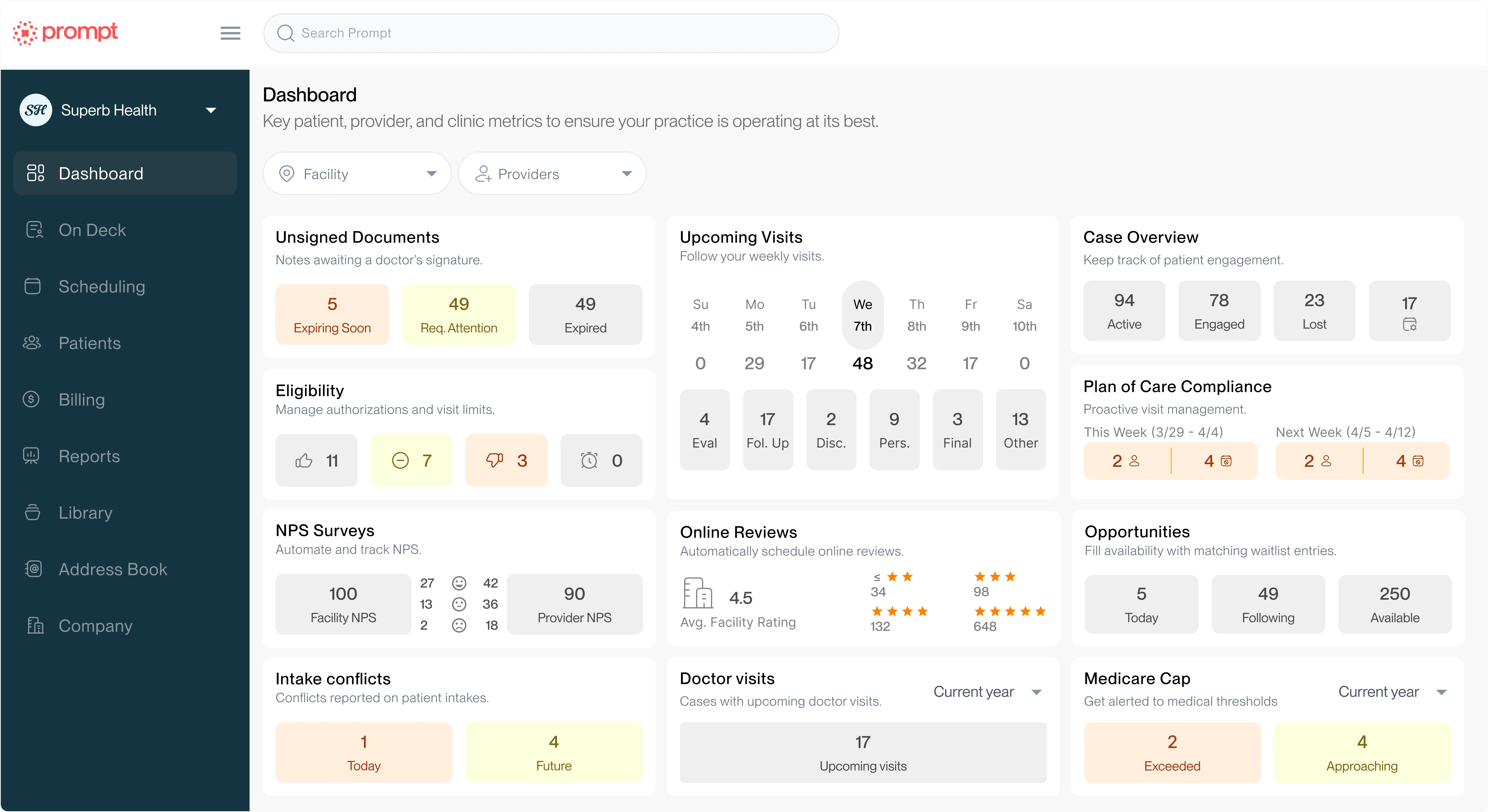
You eval. And I may do five or six ema- evals of a day- Yeah ... at, at tops. Like, that's my, my most. Um, and Sidekick with Prompt has, like, helped me with that so much. My kids are even like, "Do you even see patients anymore?" 'Cause, like, it, it has just reduced the charting so much, especially with those evals, and it, it's made me a more present, um, practitioner, and I just, I love it 'cause I'm not distracted by the notes and that sort of thing.
Um, I say when people come into the walk-in, I, I want to kn- I always say, "Do you have a primary PT that you work with?" I'm not there to steal patients, right? Like, we gotta get out of that mindset that we're in competition with each other. Um, and I know, right, that in my- in Missoula, it's hard to get into a PT, so if they are using PT, it's probably they can't get into their primary PT.
And it's also, right, putting that patient, when I ask, "Do you have a primary care PT you usually see?"
Marla: Mindset.
Sam: Yeah, mindset. And they're like, "Well, I actually usually see so and so." And I'm like, "That's fine. They're not within our Alpine system, but, uh, would you mind if I send them these notes so that they know you s- you got care here, and they can kind of pick up where I left off?"
The patient feels [00:39:00] cared for. I am helping somebody else keep their business going, PT Starbucks effect.
Marla: Yeah.
Sam: Um, so the three things when someone comes in, they're either going to go traditional PT, like this is somebody that needs to go through the process a little bit to unwind and, and maybe it's a, you know, whatever the, the indications of that can be, that this person's appropriate for once a week or once, twice a week for a couple weeks, or maybe it's six weeks.
They need somebody consistent following them that may be the referral. And that can be either to my own business, which is great, but I also will refer if they're working with somebody else. I'm not there to steal patients. The second one might be that it's, um, you know, "I think you're gonna do pretty good.
Why don't you follow up? You- it's on you to come back and, and schedule or walk in, schedule online to pick up another appointment just to see if we can get this through. But I would anticipate one or two visits, and you can get those in the next couple weeks within our clinic, our walk-in system." And then, um, the third one might be, "Oh, this is not within our system or our scope, you know.
I, I need you to seek out X, Y, and Z." And that might be Jingles Pharmaceutical Management or behavioral health. Like, you really... This is more of a panic attack, like, symptoms. Or I wouldn't say that directly to them. Right. But, like, we need to expand your care team and really understand what else is going on in the nervous system, and I'd like you to see this person that I work with or this person.
Would you be open to that?
Marla: So you really become part of the [00:40:30] primary care team model-
Sam: Yeah ...
Marla: and share that with the right patient at the right time and with the access.
Sam: And then always if we are talking referral to e- imaging, if it's indicated that imaging may help, before I order, I am always asking, "What are we gonna do with this information?"
And 'cause it's expensive.
Marla: Yeah.
Sam: And some people, yes, could they benefit from it? Yeah. But would $2,700, like, be more stressful to them than maybe just trying to see if a couple PT appointments might help them? Yeah. So we talk through, like, when and where and why we would need imaging, and what we're gonna do and how that would impact our plan of care and their decision-making, whether it's they have an expensive trip overseas or they have a event coming up that they've been training for, or they need to get back to- Yeah
to work or something. So I think that that is important to understand, um, when you order imaging, that you involve the patient in the conversation, um, because healthcare's really expensive, and helping them understand what their, what their money is gonna get them, because I, I don't think that there's anything worse than people spending a lot of money and then not needing it or, like, not finding out, didn't know why they were getting it, right?
Marla: Yeah. So. Yeah. And I wanna go back to you said that one of the secondary effects of this urgent care model is that you actually are seeing people earlier, so your plan of cares are shorter than a regular back pain coming in after years of pain and bunch of different [00:42:00] routes and maybe medicine or this and that.
You're getting people right away, so maybe get them better in eight visits versus 12, 14, 15. Sometimes that scares a owner because they're like, "Oh no, I wanna see a lot of visits because then we're... You know, um, that's part of our model." But what I would say is you probably are more profitable in the urgent care model because you're seeing more evals.
Sam: Absolutely.
Marla: And evals actually get reimbursed at a higher rate. So we should all want to get the patient better faster. It's like the restaurant effect. If you turn over more tables, you actually do a lot better that day than if you have one table there for three hours, right? So you're, you're probably getting reimbursed better 'cause you're seeing more evals and you're getting people better faster, and if they need that long-term care, you're putting them over to your clinics, per se.
Sam: Yeah. And I would say, you know- That is exactly true. I think that our CFO is still... We all are trying to kind of r- like, figure out the metrics that you would measure success financially with this model, and they're not as, like, clean as the in- leading indicator metrics that you might use to kind of plan out, like, when you're at capacity and all the things.
Um, and we're starting to understand more about that. Um, but yeah, y- you do see more evals. I will also say that in my, in my time kind of hanging out at work comp and chamber events, and doing all the things, and the networking that [00:43:30] we've done for legislative stuff, a lot of people come to me and they say, "Well, I tried PT.
I just kept going and going and I... It was expensive, and I really didn't get better." And so I would argue, if we're seeing patients for 10 or 15 visits, that's might be just bad PT, and we're actually doing a disservice to our business and our profession.
Marla: And we may not be using the team appropriately. I know-
Sam: We may not be using the team appropriately.
Marla: Yeah. Y- I know your model, you do use PTAs, and now you're also starting to use ATCs, and-
Sam: We hope I know ... all of those things, yeah.
Marla: So allocating the right resources to the right place, like you said, if you have your really experienced PTs doing the evals and the urgent care, and then the ones that need a few more visits maybe sharing with the PTA team could be a great route.
Sam: Yeah, and that's where, like, the, the walk-in model or the urgent care model, it's, it's a little messy. It doesn't fit in everybody's practice or company neatly. It's not like adding a public health program. However, I would, I would say that knowing what we've known after, um, I guess being in the lab for 10 years doing it, we have a lot of insight on where it might work best, right?
And so... And, and as I talk to people, sometimes I hear, "Well, we do something like that. We keep lunches open and after, you know, after, at the end of the day open for those people that really need to get in." I'm [00:45:00] like, "Well, that's walk-in." "Oh, no, we wouldn't wanna call it that." And I'm like, "You do wanna call it that so the consumer knows."
Yeah. Again, it comes back to identity.
Marla: Identity.
Sam: If patients don't see walk-in PT or we don't all name it the same thing, it's gonna cause confusion. We all know what a Kleenex is.
Marla: Yeah.
Sam: Right? And we also all know what tissue is, but they're two different things, and we have to find that language that everybody will work on.
And that's where, like, you know, you don't need to have a walk-in clinic that matches Alpine's. It has worked, and we are seeing within our community, um, two other PT clinics offering them, which is great. I'm like, all the better, right? Like, let's let... This means that this is something that the consumer wants.
There's the demand, and hopefully someday we see it across, across the US, you know, that we can go in any corner and, and figure out, like, if you fly into New Jersey and you slept wrong on the plane, you know you can go and find a PT appointment to get what you need.
Marla: Well, and you, you really nailed that saying, calling it the right thing.
And people may be doing it, but they're not calling it walk-in or primary care. It is a different mindset when a patient knows I can just d- go directly to PT. I can go to that walk-in clinic 'cause I'm in pain today. I can see my therapist and not wait for a script. I think that a lot of clinics are doing a disservice by they know they can take someone without a script, but somebody calls and says, "I'm in pain", and they say, "Oh, do you have a script?"
We're killing ourselves [00:46:30] there.
Sam: Yeah. We are
Marla: totally. Why are we asking them to go get a script? Um, so we definitely, uh, uh, thinking you're nailing that with identity and language, and we have to start speaking that way even if we're not truly practicing fully an urgent care model, but we are, uh, offering walk-in hours, and how are we saying we're your primary care provider?
Sam: Right.
Marla: We are your primary care physical therapist.
Sam: Yeah, and urgent care sometimes scares people. Mm-hmm. And it's interesting if you look at the medical model, like urgent care in the medical model was introduced in the '70s, and it actually didn't come to the public mainstream until the early 2000s, late 1900...
1990s. And now, like if you're driving your kids to somewhere, you, you either know you're going to urgent care or you know you're going to the ER.
Marla: Yeah.
Sam: And, and it's not because you're a PT, you just know because you know they have, they have done a great job of branding.
Marla: Mm-hmm.
Sam: And so I, I would hope that at some point in the 10 years that we can coming as a profession we can create that access for somebody that they can say, I know if I have pain, I know I can go to PT.
And it comes back to, like, what's the one thing we're trying to solve? Yes, it's payment, but again, we have to position ourselves. It, payment, uh, is so tied to identity and to know our place in the healthcare system,
Marla: which- And our [00:48:00] value ...
Sam: and our value, but yeah, we have... I mean, people need access to it, if- Yeah
and I, I said this, like we talked about, like right now, the MSK kind of pain movement is that, you know, you enter the medical system and you may get the backhoe when you, when a wheelbarrow is perfectly fine to move the little pile of dirt, and we need to be the wheelbarrow, and it needs to be like, start there.
It's, it's cost-effective. It's, like does the least amount of damage. Um, we wouldn't bring in a backhoe to move a pile of dirt in our backyard. It would cause all o- all sorts of things and be really expensive. So like, how do we as a profession position ourselves to be recognized as the best tool in the front line in that, in that, that entry point, the first contact for our healthcare system?
Marla: And I would... You, you just earlier said that, you know, it is a financially rewarding model because you have a lot more of those evals, getting a little bit more of the payment. Um, I would say secondary, it solves a very big problem happening right now, which is our workforce, meaning we have a lot of PTs that are burning out and leaving.
Um, and earlier I had talked to you about this, where you said PTs are so rewarded by this model. They love this model. So if you can explain where you see your providers and clinicians in this model and what they tell you, and your retention through it, and why.
Sam: Yeah, I mean personally for me, I, at the end of 20 years [00:49:30] practicing, which was a little, couple years ago, but I was getting that kind of tired, dreading maybe the one or two patients on my schedule, and just being tired, and like not doing the best job I could do.
And I, and I don't You know, there's a lot of different reasons potentially. It was also before Sidekick Scribe. But, um, uh, when I moved into just the pri- the walk-in, um, model first contact, like it's where you can ... You, you really are utilizing your, your clinical reasoning skills, your test retest, ruling in, ruling out, problem-solving and navigating.
It's so rewarding, and patients are so grateful, so grateful. Yeah. They just are like ... It, it, you make such an impact to somebody when you can help somebody, um, turn the corner so quickly and, and just ... And it's so funny 'cause sometimes I don't even ... I'm like, "That wasn't even that hard of an eval," right? Like, but you're answering big questions for them where they don't know where to go.
And so I think that was helpful for me, and it, it has really made me just really enjoy going to work. I kind of think of it as Top Chef. You don't know who's walking in. You have basically 55 minutes to understand their, who they are as a person, 'cause you gotta treat the whole person, and then n- understand the condition you're gonna get, and then what, what's gonna make the biggest impact when you have them there, and then you have [00:51:00] to have the buy-in.
So you gotta retest test to, like, make sure they see that your treatment, the exercise has improved their movement, has maybe changed some of their symptoms, and then send them out the door with a plan. And so it's, it is kind of fun, right? It's like, kind of like adrenaline.
Marla: So- And I would say for a lot of the clinicians, that's maybe where sometimes they feel like they're not getting that autonomy or that- Right
mental growth with the day to day and all the extra, um, as you said, you guys utilize Prompt and Sidekick and all that, so that gets taken out of the way. They don't have to worry about all of those pieces. Um, but they're able to truly- Practice at the top of their education and act like doctors- Right
like we are. Yeah. We are doctors.
Sam: Yeah, yeah. And I think for what we found is like we've have had, um, a couple faculty that like work either at the university or, or high ren- um, remote university, and they're com- we can hire them as like contract ... So four hours a week they get to work, and they get to be in this model.
And so we get these, you know, somebody that's maybe very good at orthopedics, and they're practicing in this setting. They really love it 'cause they're, they're getting some real hands-on, but it's very short, right? They're not having to sign up to be a staff PT twice a week and try to track the follow-up visits, right?
So it, it works for that as well. Um, I think that it works well for some of our folks that [00:52:30] may want a little bit of a different thing. They may be treating traditional model, but they wanna come in and do like a couple hour, like, you know, we do like four to six-hour blocks, and they can come in and, and sometimes staffing like there- yes, there are some days where we only have one or maybe nobody come in, and that's, that is a risk that you have if you have these kind of walk-in.
And that does, again, come back to the type of model of walk-in that you would wanna implement based on the size of your company and your capacity and all of those things. But a lot of the folks that we also have are program, um, leaders, so they might be in charge of the running program or the public health or, um, where they, they might have projects to work on for outreach or so that they have something that is still helping the business go through.
We have a lot of our clinical directors that might do a half-day in there, and so they can do some of their admin stuff if people, if it's not busy, and that's just kind of that balance of trying to juggle it, so yeah.
Marla: You said earlier that one of the reasons this model works is because you have the right tech to help facilitate and make all those little pieces come together.
So if you could explain how you utilize the right tech, what kind of tech, and where that fits into your model, that would be great.
Sam: Absolutely. Um, I think the technology is hard because you, you do have to embrace it and adapt it, and it, it, you have to learn something new, and [00:54:00] that can be hard for some providers 'cause we've been trained in a system of our habits.
But what I see tech being for us is to reduce the administrative burden, to, to gather the information that we need while allowing us to still, um, put more energy and more focus on our clinical reasoning and who... And putting all the pieces of who that person is in front of us and what they need. And, and if we can leverage technology to take care of the verification, to take care of the scheduling, to take care of the, the communication and the coordination of care, then we get to do the best thing of our job, right?
Which is, like, teach someone how their body works and how it can adapt, and that it's designed to adapt to move through whatever they're facing, um, and so that they can say yes to, to life.
Marla: And you did say that you started this primary care model around the COVID time, which I believe is around the time you also switched to Prompt.
Yes. Um, and I know that a lot of EMRs prior, y- you get stopped on the intake if you don't fill everything out, and you can't really function like a primary care provider. So if you could explain some of the, the attractiveness or reasons that helped you switch to Prompt to be able to do this model, that would be great.
Sam: Yeah. I think there's so much, um, [00:55:30] flexibility within Prompt that, like even for my intake, I can create templates so that it, I... The Sidekick is really listening to those red flag questions I'm asking, the medical history complications and, and histories questions I'm asking, and it, it, it is allowing me to do what I need without focusing on it and supporting me is almost like, um, like somebody would...
Like having an assistant with me. It's wonderful. And then, you know, using the, the AI to help me draft an, a referral to radiology or even, even just a, a summary to maybe their fitness trainer, you know, that I can kind of pull out, it, it has reduced so much of that administrative burden when we're talking about coordinating care and, and making sure the patient feels like they understand what is expected and what is their, the plan of care and what this is gonna look like in their life.
So, um, and then I think the, the online booking has been amazing, too. Um, that has been a game changer for our walk-in and also our, just our, our normal clinics as well. Um, and the communication that is easy between providers is also great, too. It creates a little bit of that consistency that we need across the board.
So, um, and I feel like I'm, I'm less, like, stopped by, like, "Oh, [00:57:00] am I, am I using the right code to do this or that?" Or, "How did it line up?" Because it's already telling me what my codes are and, and double-checking and making sure my I's are dotted and my T's are crossed and it's great. Now, my biller, who used to have to send me an email to say, like, "This thing wasn't done," it's already telling me before it even goes to the biller.
So all of those things really line up nicely. So yeah, we've been really happy with it and I, I think it has been a game changer for our whole practice, but also I'm really excited as I continue to see Prompt innovate with our profession and to support our profession, um, doing what our profession does best, which is be the frontline first entry contact.
And you guys are gonna allow this to be not just for those that have a cash-based practice, but really allow this kind of practice happening at The more traditional model, those payers, the commercial payers, Medicare, all the things, and that's, that's what we need, so yeah.
Marla: I, I, I agree. We really do need to start to push that to everybody.
Um, and I would say it's a industry-wide, if we can all align on that, then that's where our future should be going.
Sam: Yeah.
Marla: Um, being able to be valued higher, being able to see more evals and diagnostic and what we are best, that movement specialist, um, and then getting patients better faster, quicker and faster.
Sam: Yeah, yeah. It's great.
Marla: Um, if you had any advice [00:58:30] to clinicians out there, maybe it's a student listening or it is a clinician in practice right now or an owner that really wants to move forward and think about how to implement something like this, what would you, what would your advice be? Um, even if it's not implementing, just what would your advice be to everybody moving forward in the next five years, um, a takeaway from all they listened to?
Sam: Oh, man. Um, I, I think we have to always come back to our why, and asking them, like, ask yourselves your why. Why are you in this profession, and how can we best show up with the skill set, which is amazing skill set based on our education, to serve our healthcare system in the best way? And I think we I come back to identity and that we are all PTs first and foremost, that we are treating pain and movement, and then we have our specialties.
Because with that identity, we are gonna get a lot more, um, done and accomplished if we have a bigger group. That community, um, will create a bigger movement, and we'll be able to, to make the needle move so we can step in at a fuller capacity and do the work that we are so good at. Perfect.
Marla: For those clinicians that maybe don't feel comfortable yet to treat in this way, who do you recommend that they follow, or classes they should take to learn more and get up to par [01:00:00] to be a primary care provider?
Sam: Yeah, um, there's a wealth of, I mean, I feel like every day I see new platforms where you can seek out. I think one of, um, the ones I go to that I recommend a lot is just, it's such a nice, easy, basic course. APTA puts it out on their learning center. It's the primary care cert, or certification, or certifica- certificate.
And it's six modules, um, and it's self-paced. Nice. And I think it's, it's really reasonable. Um, I think that's a great place to up-skill, just to kinda make sure you're not missing any of those things. One of those presenters in that module is Katie O'Bright, who's just a, a powerhouse and leading in this space of really making sure people can up-skill to whatever level they want, um, and in different areas of primary care.
And I think she's, she's got just a, a lot of other, um, platforms and, and opportunities. I have done a couple workshops with her where I talk more about our walk-in model. And then at the primary, or the private practice section in November in Colorado Springs, I will be presenting, um, I think it's, it might be titled The Walk-In Model for, for Physical Therapy, but I'll be doing, um, a presentation on that as well, just talking about our model and that sort of thing.
So those are platforms where people can kind of learn a little bit more. Um, and then of course the SIG. Go to the website and check it out. There's a lot that's going on there, um, uh, for different courses and, and [01:01:30] conferences are, that are up and coming.
Marla: Great. And what about people who wanna reach out to you directly?
How can they reach you, and will you be offering any courses or consultation services in the future? Oh,
Sam: yeah. Um, you can go to our alpineptmissoula.com website. Um, my email is just sam@alpineptmissoula.com. E- pretty easy to find me there. Um, and are, we are looking at, um, s- ramping out a consultation or a consulting business around trying to help others, uh, create the best model for walk-in for their, for their f- company.
Because I think over the last 10 years we have learned so much that we really understand where this will work and what things will kind of really work well in some capacities and maybe not others, and the p- pieces there. So I think it could be helpful to, to get other companies to, to get through those 10 years of experience much quicker and efficiently, um, if they are going to kind of launch something like this.
So yeah.
Marla: Really appreciate it, and just all of your insights, sharing your ways that you learned the hard way- ... of 10 years to getting where you are now, and being able to help others, not only from advocacy in a statewide level, but also from practice, uh, and being able to tell others, "You can do 60 evals in a day and still go home and treat your kids."
Uh, or see [01:03:00] your kids. Um, that's all pieces that are invaluable, and I hope that anyone listening takes away and says, "I can do this, too. I am a primary care provider. I am a movement specialist," and that's the way we all have to stack hands to move forward. Yeah.
Sam: Thanks. Thanks for having
me.