High-growth practices are significantly more likely to adopt AI and automation across core workflows, not just experiment at the edges. And the gap between those who are adopting it and those who aren’t is starting to widen.
It feels like yesterday that "AI in healthcare" felt like a future conversation... That's changed.
How are high-growth PT practices using AI to pull ahead?
In our recent report, the Practice Growth Index, we analyzed responses from more than 550 outpatient rehab therapy practices nationwide, and the results tell a clear story.
The highest-growth PT practices aren’t talking about AI anymore. They’re using it every day in ways that directly impact revenue, staff workload, and patient experience.
This isn’t about hype. It’s about how work actually gets done inside a clinic.
The shift: AI is moving from “nice-to-have” to operational backbone
From the data, one thing is clear:
High-growth practices are significantly more likely to adopt AI and automation across their workflows, not just in isolated use cases.
They’re not experimenting on the edges. The broader healthcare industry reflects the same shift. According to a 2025 industry analysis, the share of healthcare organizations that had adopted or were actively exploring generative AI rose from 72% in early 2024 to 85% by year-end; a pace of adoption rarely seen in clinical settings.
They’re embedding it into the core of how their practice runs.
Because they’ve realized something important:
AI doesn’t replace clinicians. It removes the operational drag around them.
Where AI is showing up today
When we analyzed how top-performing practices are actually using AI, a few patterns stood out.
1. Documentation and compliance
High-growth practices are using AI to:
- Generate structured SOAP notes in real time
- Capture visits with ambient AI scribing
- Provide real-time CPT coding guidance during visits
- Flag compliance issues before claims are submitted
This isn’t just about saving time.
It’s about finishing notes faster, improving compliance, and unlocking more visits per provider.
A JAMA study on AI scribing found that ambient AI documentation tools cut total EHR time by 13.4 minutes and documentation time by 16 minutes per clinical encounter. That's time that flows directly back into patient care or additional visits.
2. Front desk and intake workflows
Top-performing practices are using AI to:
- Digitize intake with self-service patient check-in
- Collect insurance, consent, and demographics automatically
- Process copays and payments at check-in
- Eliminate manual data entry across front desk workflows
Instead of hiring more front desk staff, they’re using automation to absorb that work.
The result:
- Faster patient onboarding
- Fewer errors
- Less back-and-forth with patients
And importantly, less need to over-hire early.
3. Scheduling and patient engagement
High-growth practices understand that growth isn’t just about getting patients in the door. It’s about keeping them engaged.
AI is helping them:
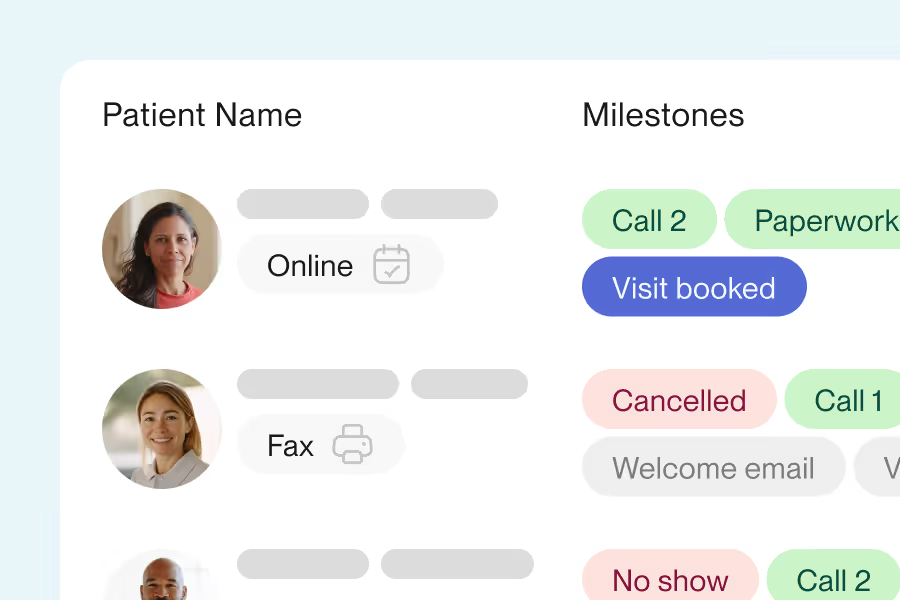
- Fill cancellations automatically using smart waitlists
- Re-engage patients who fall off their plan of care
- Predict no-shows and intervene before missed visits
- Capture bookings outside normal business hours
We’ve also seen that many of the most active booking windows happen outside of normal business hours, especially evenings and weekends when patients are planning their week.
Practices using AI-powered scheduling capture that demand.
Practices relying on manual processes miss it.
4. Operational decision-making
This is where AI becomes a real differentiator.
Some of the fastest-growing practices are using AI to:
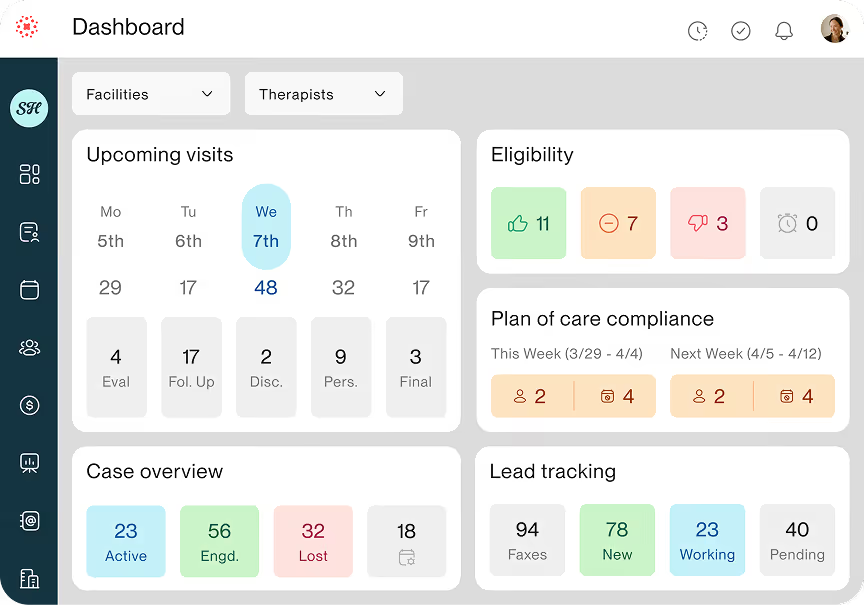
- Track revenue, collections, and forecasting in real time
- Identify scheduling gaps and underutilized provider capacity
- Flag denial risks before claims are submitted
- Surface performance trends across clinicians and locations
Instead of digging through reports, they’re being proactively informed.
And that changes how quickly they can act.
What this means for hiring and growth
One of the most interesting takeaways from the data: High-growth practices aren’t just using AI to move faster. They’re using it to stay lean longer and make work more meaningful.
Instead of solving every operational bottleneck with people, they’re asking, “Can this be automated first?”
That shift frees up clinicians and staff to focus on what matters most:
- Delivering better patient care
- Building stronger patient relationships
- Contributing to growth, not just admin work
It also changes how practices hire.
Instead of hiring reactively, they can hire more intentionally and invest in roles that actually drive growth.
The result:
- Fewer premature hires
- More focused, higher-impact teams
- Better margins earlier in the growth curve
It’s not about replacing people. It’s about building a team where everyone can focus on their highest-impact work.
The gap is widening
Here’s the reality:
Practices that adopt AI early are compounding their advantage.
They:
- Move faster
- Operate more efficiently
- Deliver a better patient experience
Meanwhile, practices that delay adoption are often:
- Hiring to solve operational problems
- Dealing with more friction in workflows
- Falling behind on both efficiency and growth
This isn’t a small difference.
It’s structural.
The takeaway
AI in PT isn’t a future concept anymore.
It’s already shaping how the highest-growth practices operate today.
And the biggest shift isn’t what AI can do.
It’s how practices are thinking about it:
Not as a tool. But as part of their operating model.
If you’re running or growing a practice today, the question isn’t:
“Should we use AI?”
It’s: where is manual work still slowing us down and what would it look like to remove it?
Explore the full findings
We break down the complete data, benchmarks, and trends behind high-growth practices in the Practice Growth Index. Read the full report here.






.png)
.jpg)