.jpg)

.png)
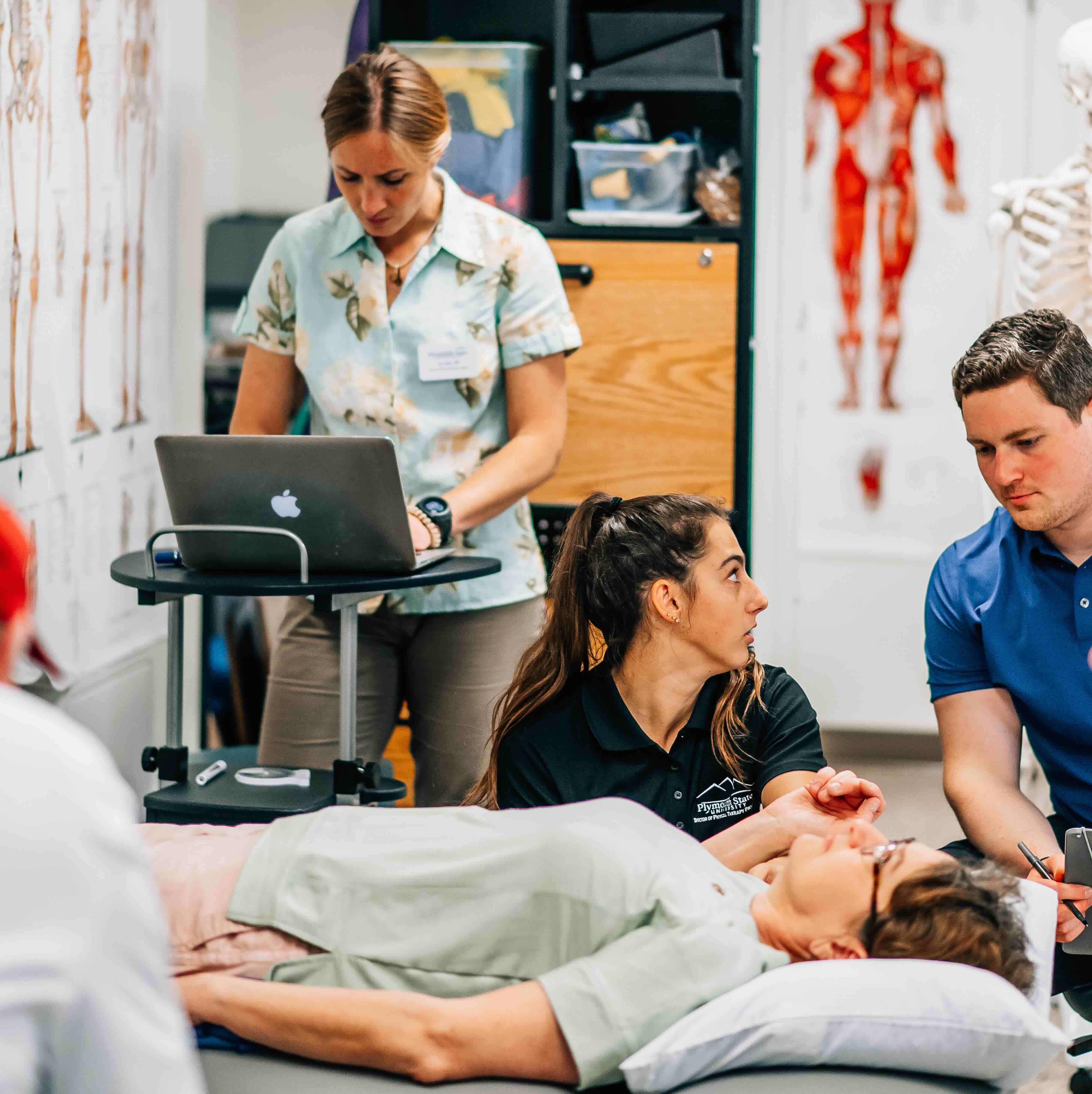

Plymouth State University’s doctor of physical therapy program gives students real clinical experience from early in their training through an on-campus pro bono clinic. The clinic supports the surrounding community while helping students develop the documentation, communication, and clinic operation skills they need to succeed in their clinical rotations and beyond.
Associate professor and DPT Stephanie Sprout oversees the program’s integrated clinical experience. After dealing with limitations in their prior EMR, the clinic adopted Prompt to modernize workflows, reduce the administrative burden (a problem even in pro bono clinics!) and unlock better data reporting across the platform.
Life before Prompt: Outdated, manual workflows
Before Prompt, the clinic was running with operational processes that were harder than they needed to be. Data reporting was limited, everyone hated scheduling, and documentation was cumbersome.
Though it may seem small, Stephanie said her office was overwhelmed with old paper charts, data she said “didn’t have anywhere else to go.” Now with Prompt, all charts are digitized, and the clinic is easily and safely able to scan imaging or other documents to live in the digital file as well.
“To not have paper charts exploding in our very limited space has been an unexpected delight. I didn’t even realize it was such a burden until it disappeared,” Stephanie said.
Why Prompt: A desire for real-world experience
Students in PSU’s clinic take turns at all clinic roles, including scheduling, marketing, and simulated billing roles. One of the clinic’s main goals, Stephanie explains, is to prepare students for whatever role they may step into next, and Prompt has helped them achieve that.
To be able to talk intelligently about scheduling, about clinic management, patient profiles, the patient experience, from an EMR standpoint, I think [Prompt] is making our students more marketable.
“To be able to talk intelligently about scheduling, about clinic management, patient profiles, the patient experience, from an EMR standpoint, I think [Prompt] is making our students more marketable,” Stephanie said.
Because students are in the driver’s seat at the clinic, the EMR they use needs to be intuitive enough to pick up quickly, so they can focus on learning the clinical skills they need to be successful as they treat patients.
With Prompt, the students can manage day-to-day clinic operations more independently, which has reduced the amount of manual oversight needed from faculty.
“I’ve had to do a lot less micromanaging as a faculty member, which has been really nice,” Stephanie said.
Even with how intuitive Prompt has been for students, questions will always come up. Stephanie historically fielded a lot of these questions herself, but Prompt’s help center, support team, and Prompt University videos mean that students can find more answers themselves.
By giving students a clear support pathway and clear answers, Prompt has reduced overall disruptions in the clinic and freed up additional faculty time.
Easier faculty supervision and feedback
Because the clinic is designed as both a care setting and a teaching environment, documentation review is a major part of day-to-day operations.
Faculty need to be able to review student notes efficiently, provide feedback quickly, and supervise care without needing to juggle multiple platforms or manually emailing notes back and forth outside of the EMR.
Prompt has made it significantly easier to bring additional instructors and supervising clinicians into the workflow, which improves both oversight and student learning. Instead of relying on university tools or back-and-forth email chains, faculty can review and comment directly in the same system where students are documenting care.
“Now all I have to do is create that person in Prompt, give them access, and they can jump in. They can review everything, they can do grading, they can give notes to the students that they're supervising,” Stephanie said. “And it's taken a lot off my plate from incorporating other clinicians into our clinic for supervision hours as well.”
Better clinical preparedness
The pro bono clinic at PSU is embedded in the curriculum so they’re getting repeated clinical experience (and the documentation that goes along with it) from their second semester in PT school.
Rather than navigating a new EMR and documentation workflows for the first time when they’re in a new job, students build their competency and confidence through real, but slower-paced, clinical care.
As a result, Stephanie said, PSU students are more prepared when they enter their clinical affiliations, and by extension, their first jobs out of school.
One of the biggest pieces of feedback that our DCE continues to get from our clinical partners is that our students are better prepared than the majority of their peers when they enter their first clinical rotation.
“One of the biggest pieces of feedback that our DCE continues to get from our clinical partners is that our students are better prepared than the majority of their peers when they enter their first clinical rotation,” Stephanie said. “They’ve had 3 semesters on campus treating patients in our pro bono clinic doing documentation, and that’s allowing so much practice.”
That practice allows them to be more present in their affiliations also, absorbing the culture of a clinic, doing independent research, and not being burdened by the additional learning curve for a new documentation software.
Measurable impact
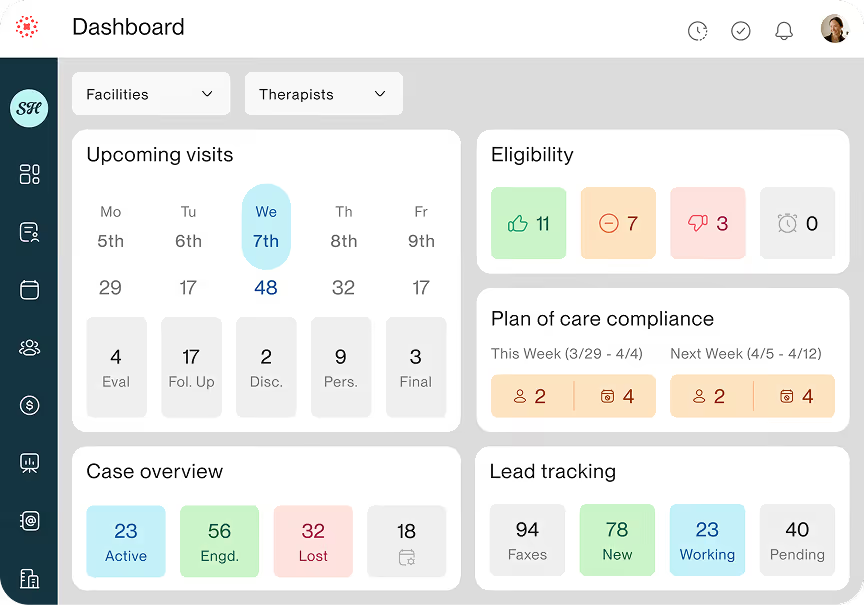
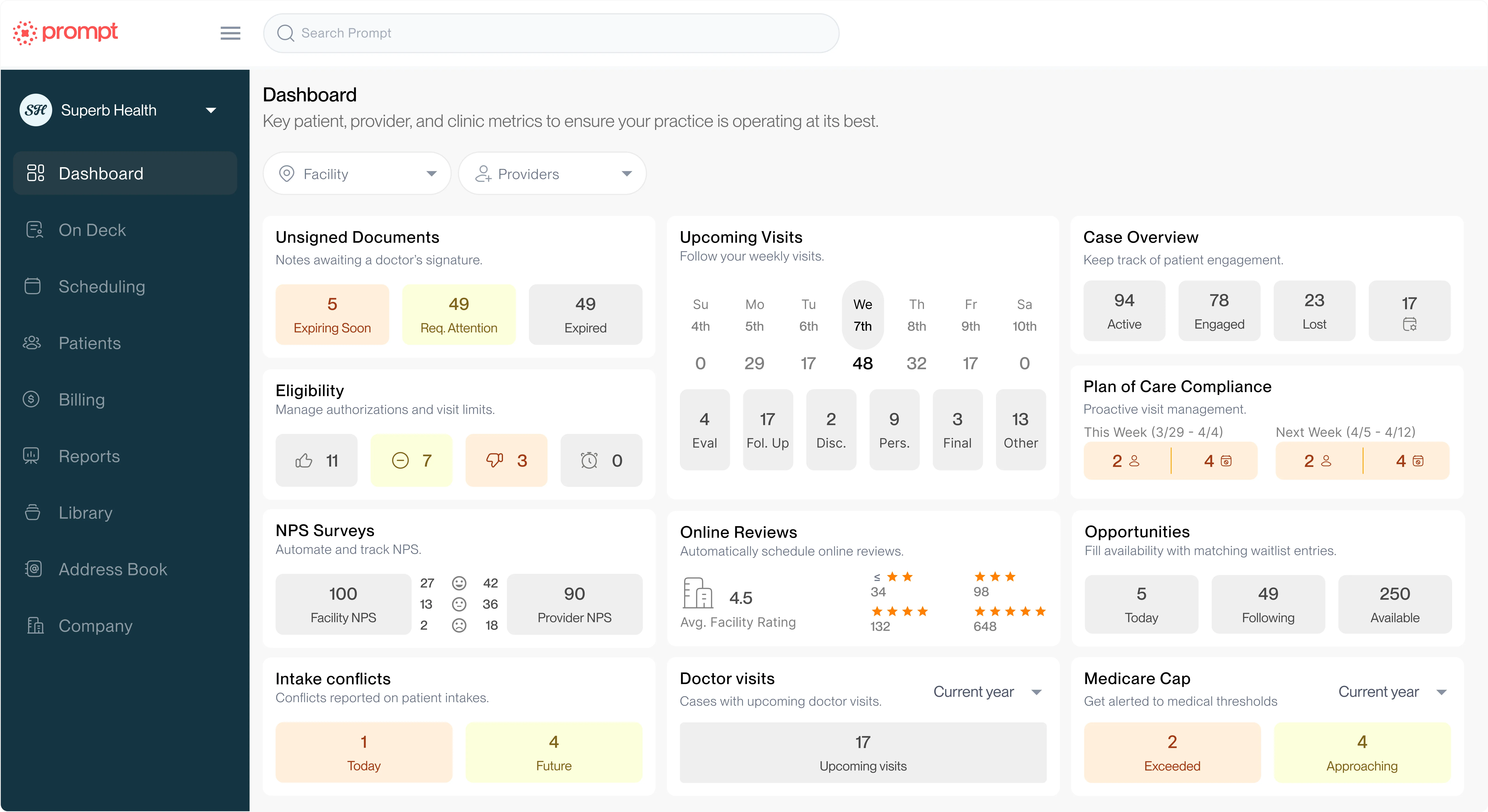
One of the most meaningful improvements PSU has seen since switching to Prompt has been access to accurate and actionable data. With Prompt’s dashboards, Stephanie can show all the data she needs to clearly communicate the impact the clinic and her students are having on the community and the university.
“Prompt has really impacted our strategic goals in the clinic,” Stephanie said.
Because she has such robust and reliable data at her fingertips, she’s been able to “grow our program a little bit, to talk about it intelligently. And it’s given me a bridge to talk to our administration, to show we’re adding value.”
Since switching to Prompt, Stephanie can easily report that their cancellation is under 5%, and that they’ve seen over 6,000 visits since switching a little over 2 years ago.
“This is an invaluable service,” Stephanie said. “It’s a really powerful marketing tool to prospective students, but it’s important to remind current students, too. And to have an EMR that's giving us metrics, showing data on how we're serving our community, is a really beautiful thing.”