Published: 8/10/26 | Last updated: 8/10/26
Some details in this article, including final code numbers and CMS rates, are still being confirmed. We'll update it as new information becomes available.
Speech-language pathologists have billed 92507 for years without thinking much about it. Many times billing was as easy as one session, one code, one charge. It worked because the code was designed that way: untimed, all-encompassing for speech, language, voice, communication, and/or auditory processing therapy, and simple to apply.
That changes on January 1, 2027.
CPT code 92507 is being retired and replaced by 10 new time-based codes. For the first time, SLPs will need to track minutes similar to the way physical therapists and occupational therapists have for years. For many clinics, that's a fundamental change to how documentation is structured, how sessions are scheduled, and how billing is calculated.
The good news: you have time to prepare. The better news: the change is more manageable than social media makes it sound.
Here's what you actually need to know about this change.
Why the code is changing
The shift started with utilization data. A committee called the Relativity Assessment Workgroup (RAW) flags CPT codes that see significant volume growth over time. Medicare utilization of 92507 more than doubled between 2017 and 2022, growth substantial enough to trigger a formal review.
That level of growth caught the attention of the American Medical Association (AMA), which creates CPT codes. The conclusion: 92507 had not seen significant updates in over 16 years, and the field had evolved. New codes were needed to accurately describe what speech-language pathologists actually do.
The result is 10 new codes, effective January 1, 2027.
What the 10 new codes look like
The new structure mirrors how speech therapy evaluations are already coded. There are 5 base codes and 5 add-on codes, each tied to a specific treatment area:
- Fluency (initial 30 minutes + each additional 15)
- Speech sound production (initial 30 minutes + each additional 15)
- Language comprehension and expression (initial 30 minutes + each additional 15)
- Voice and resonance (initial 30 minutes + each additional 15)
- Speech sound production and language comprehension/expression combined (initial 30 minutes + each additional 15)
That 5th code, often called the "combo code," is expected to see heavy use in pediatric settings where children are commonly treated across multiple areas in a single session.
The rule that will require the most adjustment: the midpoint rule
To bill a base code, a clinician must treat for at least 16 minutes under that code. The AMA defines the midpoint for a 30-minute code as 15 minutes and 31 seconds, rounded to 16 minutes in practice.
Something important to remember: you cannot combine minutes across categories. If a clinician spends 13 minutes on fluency and 12 minutes on language, neither code is billable. No combining. No rounding up. Both categories need to individually clear 16 minutes.
To bill 2 separate base codes in a single session, a clinician must document at least 16 minutes of intervention under each. That means a minimum of 32 combined minutes of categorized treatment time.
The midpoint rule also applies to the add-on codes. Because add-on codes are billed in 15 minute increments, the clinician must reach the midpoint of that increment (8 minutes) before it can be billed. This means to add an add-on code to a base code, the clinician must treat for at least 38 minutes total of the same type of treatment (30 minutes for the base, plus 8 additional minutes for the add on to be billable).
What this means for documentation
For clinicians used to a single paragraph capturing a 30-minute session under one code, this is the shift that requires the most preparation.
Notes will need to reflect time spent under each treatment category. Clinicians who see children for fluency and language in the same session will need to document those interventions separately, with times attached. For a refresher on structuring clinical notes, see our complete guide to daily SOAP notes.
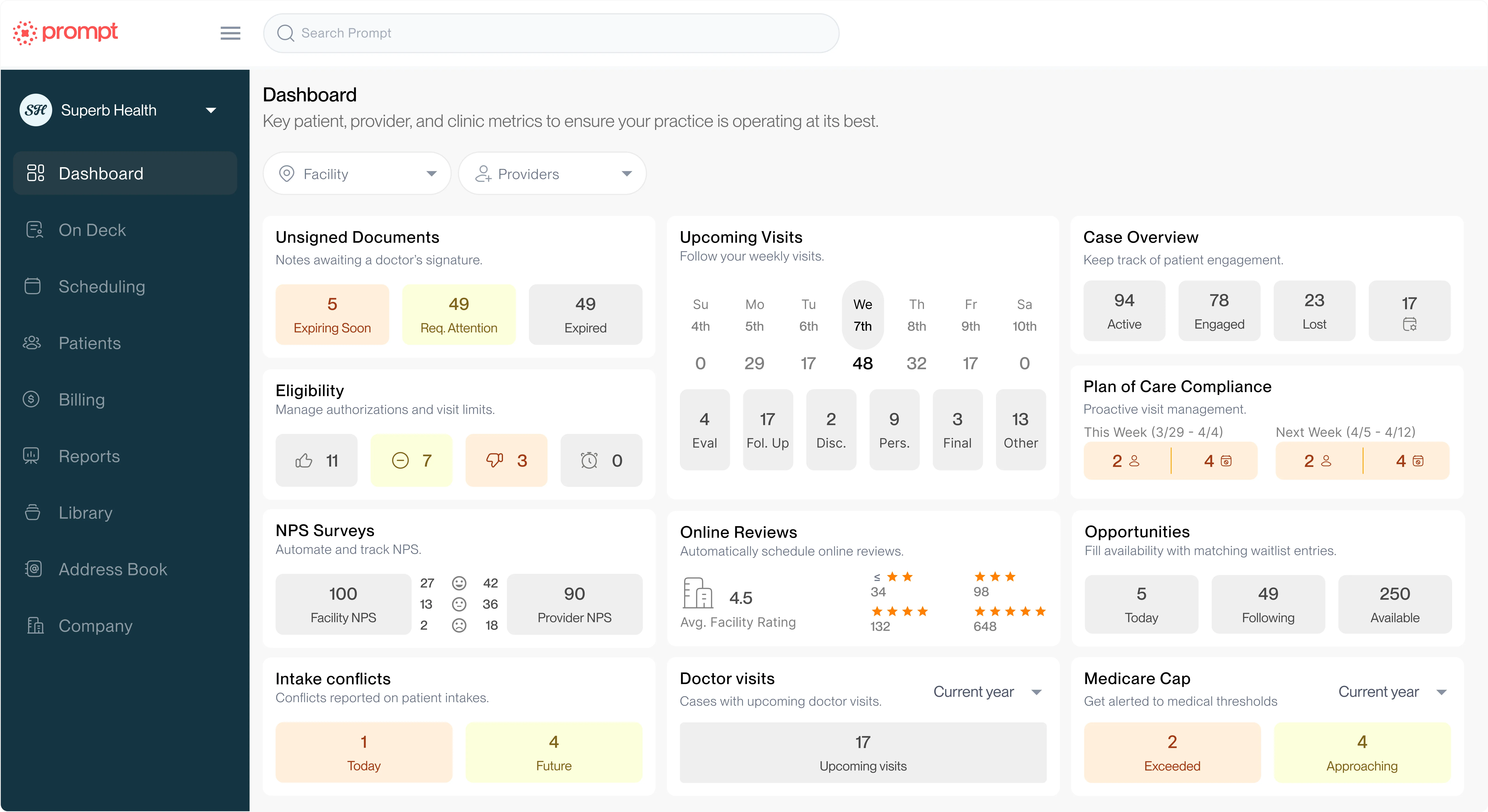
Practices using Prompt have some built-in help here: the platform is already set up for documenting minutes per treatment, and already calculates billing units from documented time automatically.
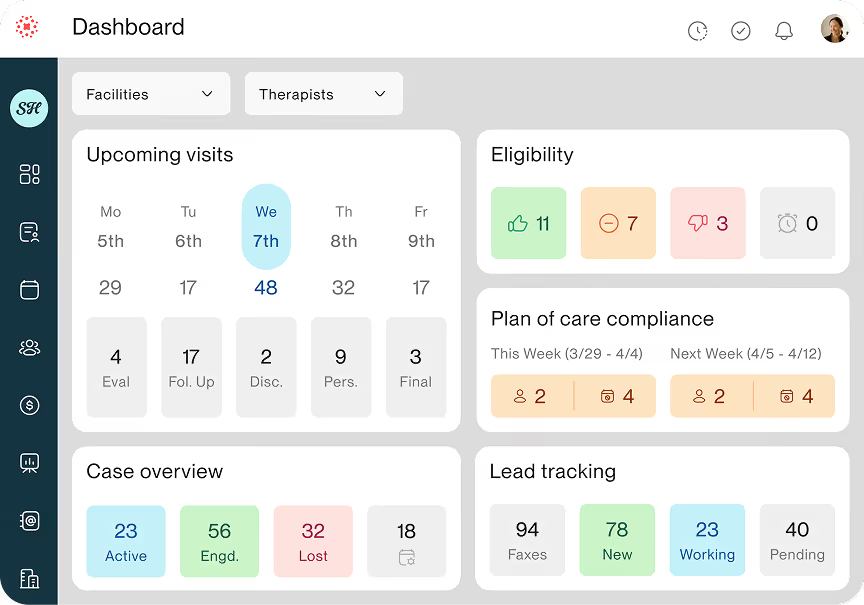
As clinicians complete treatments, the CPT Code Summary displays billable minutes in real time, including time by CPT code as well as total treatment and billable minutes at the top of their flowsheet.
For additional detail, clinicians can view the CPT Time Breakdown, which estimates billable units as they go, applies the appropriate billing rule (including the new SLP billing logic once it goes into effect) and highlights anything that still needs attention.
This gives clinicians real time visibility into how their documented treatment translates into billable units, and takes the guesswork out of having to do the math themselves during checkout, where again, everything is automatically calculated for them.
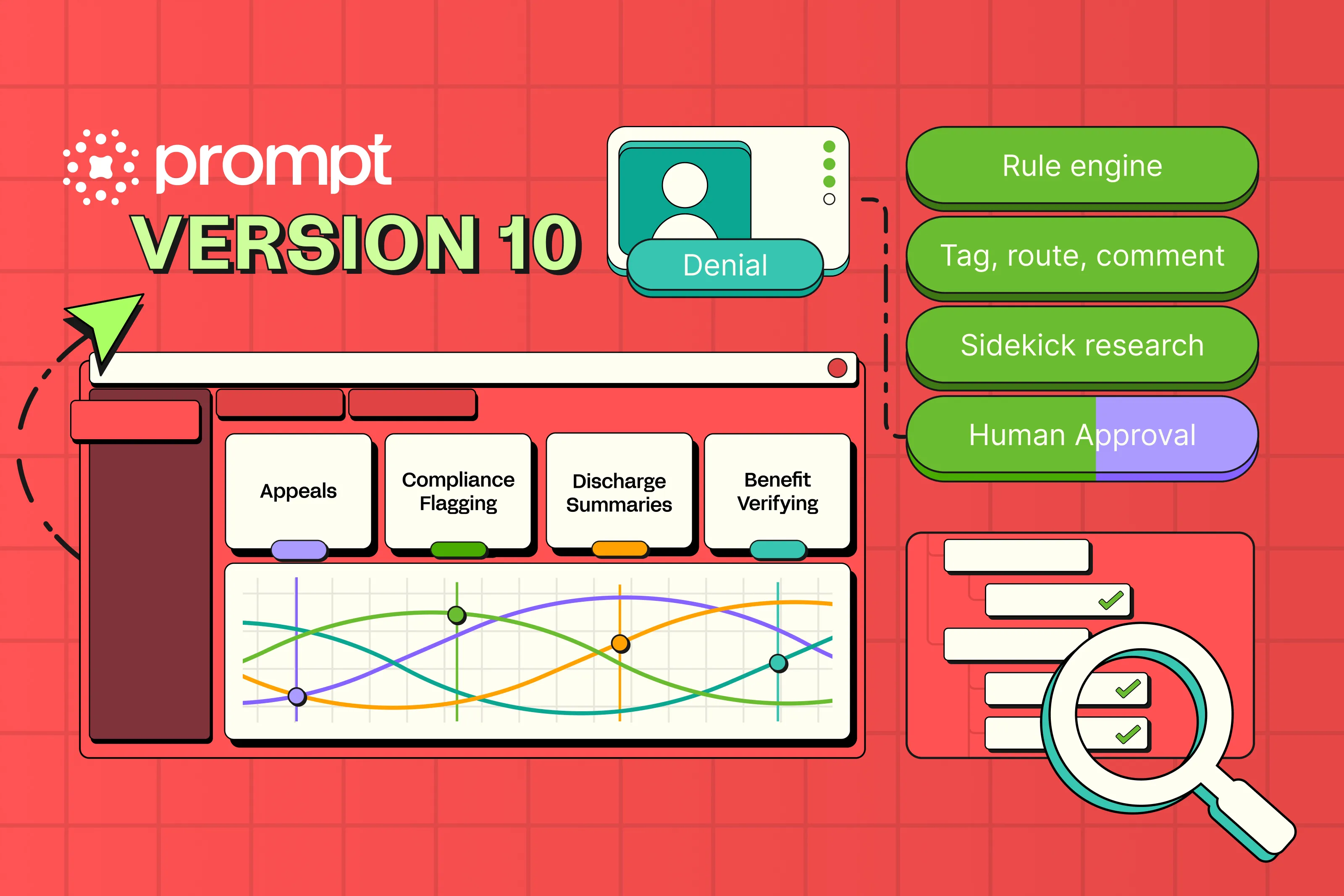
Prompt's AI scribing tool, Sidekick, is also being updated to include CPT code assistance for the new SLP codes, surfacing suggestions based on the documentation in the note and flagging when justification for a code may be missing.
What's still unknown
Reimbursement rates aren't finalized. The CMS proposed rule for 2027, which is expected to include recommended values for the 10 new codes, has not been released at the time of this writing. That proposed rule opens a 60-day public comment period, which is an opportunity for individual SLPs, state associations, and national organizations like ASHA to weigh in before rates are set.
What is confirmed: the code change itself. 92507 is being retired at the end of 2026. The 10 new codes are coming January 1, 2027.
Other codes are not affected. 92508 (group treatment), 92526 (feeding and swallowing), 92607/92608 (AAC evaluation), and 92609 (AAC device programming and modification) will remain unchanged.
The preparation window is open now
Practices don't need to wait for final reimbursement numbers to start getting ready. There is meaningful work you can do now:
Pull your session data from the past 6 to 8 months. Look at how your SLPs are currently treating: what percentage of sessions would map to speech sound production? Language? The combo code? Running that analysis now gives you a baseline to apply against reimbursement rates once they are published.
Look at session lengths. If your practice has been scheduling 30-minute sessions because that was what made sense under 92507, that assumption deserves another look. The new structure may support longer sessions, and for some patients, especially medically fragile children and those using augmentative and alternative communication (AAC) devices, longer sessions could mean meaningfully more progress.
Start conversations with your payers. State Medicaid programs and commercial payers will need to load the new codes before January 1. That doesn't happen automatically. Working through your state speech therapy association and connecting directly with payer contacts is worth starting before the final CMS rule comes out in November.
Brief your clinicians now. The documentation shift is the hardest part for most SLPs to absorb, not because it's complicated, but because it's unfamiliar. Starting that conversation early, with real examples and practice scenarios, gives your team time to build the habit before the stakes are live.
Have faith: The change is manageable
PTs and OTs went through a similar transition when evaluation codes were restructured in 2014. The field adapted. Practices that prepared early had smoother transitions and more confidence going into the change.
The same will be true here. The uncertainty around reimbursement rates is real, but it's also temporary. The coding structure is set. The work to prepare for it can start now.
For a deeper walkthrough of the transition, watch our webinar, Preparing for the 92507 change: What pediatric & speech clinics need to know.
Is 92507 really going away, or could this still change?
The deletion of 92507 at the end of 2026 is confirmed. What remains to be finalized is the reimbursement rate for each of the 10 replacement codes. Those rates will be proposed by CMS in summer 2026 and finalized in November.
Do all 10 new codes apply to every SLP?
The codes most likely to see frequent use are the combo code (speech sound production and language comprehension/expression), the speech sound production code, and the language comprehension/expression code. Fluency and voice/resonance codes apply to clinicians treating those conditions. The right mix depends on your patient population.
Will the 8 minute rule apply to the new SLP codes?
No. The 8 minute rule is a PT and OT billing construct. The new SLP base codes are 30-minute timed base codes, with 15 minute additional add on codes. Minutes cannot be combined across categories.
What happens to other speech therapy codes like 92526 and 92609?
Other codes are not impacted by this change. Only 92507 is being retired.
When should practices start talking to their payers?
Now, or as soon as the proposed CMS rule is published. Payers need time to load new codes, and some may not be ready on January 1 even if they intend to be. Starting those conversations early reduces the risk of payment delays.
Can SLPs submit comments on the proposed reimbursement rates?
Yes. The proposed rule opens a 60-day public comment period. Individual SLPs, state associations, and organizations like ASHA can all submit comments. CMS will have a template available.


.jpg)

.png)