
.png)

Pinnacle Rehabilitation Network operates 38 outpatient orthopedic clinics across New England. Today, 28 of them (75%) run without a full-time front desk person. President Dan Fleury explains how Prompt made that possible, and how the savings went straight back into clinician pay.
Since switching to Prompt, Pinnacle has seen:
- 28 of 38 clinics (75%) operate without a full-time front desk
- Over 90% of documentation completed at point of service with Sidekick
- Revenue saved redirected into competitive clinician pay, not staff cuts
Why did Pinnacle Rehabilitation Network stop staffing a full-time front desk?
For Pinnacle, front desk roles became too hard to fill and keep filled. Coming out of the pandemic, Pinnacle brought clinicians back first and rebuilt caseloads slowly, but when it came time to rehire front desk staff, government incentives, rising wage expectations, and lingering hesitation about high-traffic environments all made hiring difficult. Meanwhile, clinician salaries were climbing across the industry.
"We finally realized we have a business to operate and we need to pivot," Dan said. "We need to figure out how to operate without this resource."
How does Prompt support a front-desk-free clinic model?
Prompt replaces front desk tasks with 3 connected tools, plus a small back-office team for edge cases and the necessary human touch. Pinnacle rebuilt its front-of-clinic workflow around:
- Kiosk, which handles check-in and copay collection, removing the need for a person to greet every patient at the door
- Prompt Plus, which automates plan-of-care scheduling, so patients book their next visit online instead of clinicians managing it manually
- Sidekick, which moves documentation to point of service
A small back-office call center handles the remaining edge cases, like complicated insurance questions, without adding headcount at every location.
"Prompt made it super easy for the therapists to schedule appointments," Dan said, describing how patients can now book their next visit right after an evaluation instead of waiting on a callback.
Looking back, Dan credits those early workflow changes with building momentum for everything that came after: "The efficiencies gained from the processes that Prompt allowed us to do in updating our workflows was probably one of the first and biggest steps."
What does Kiosk actually do?
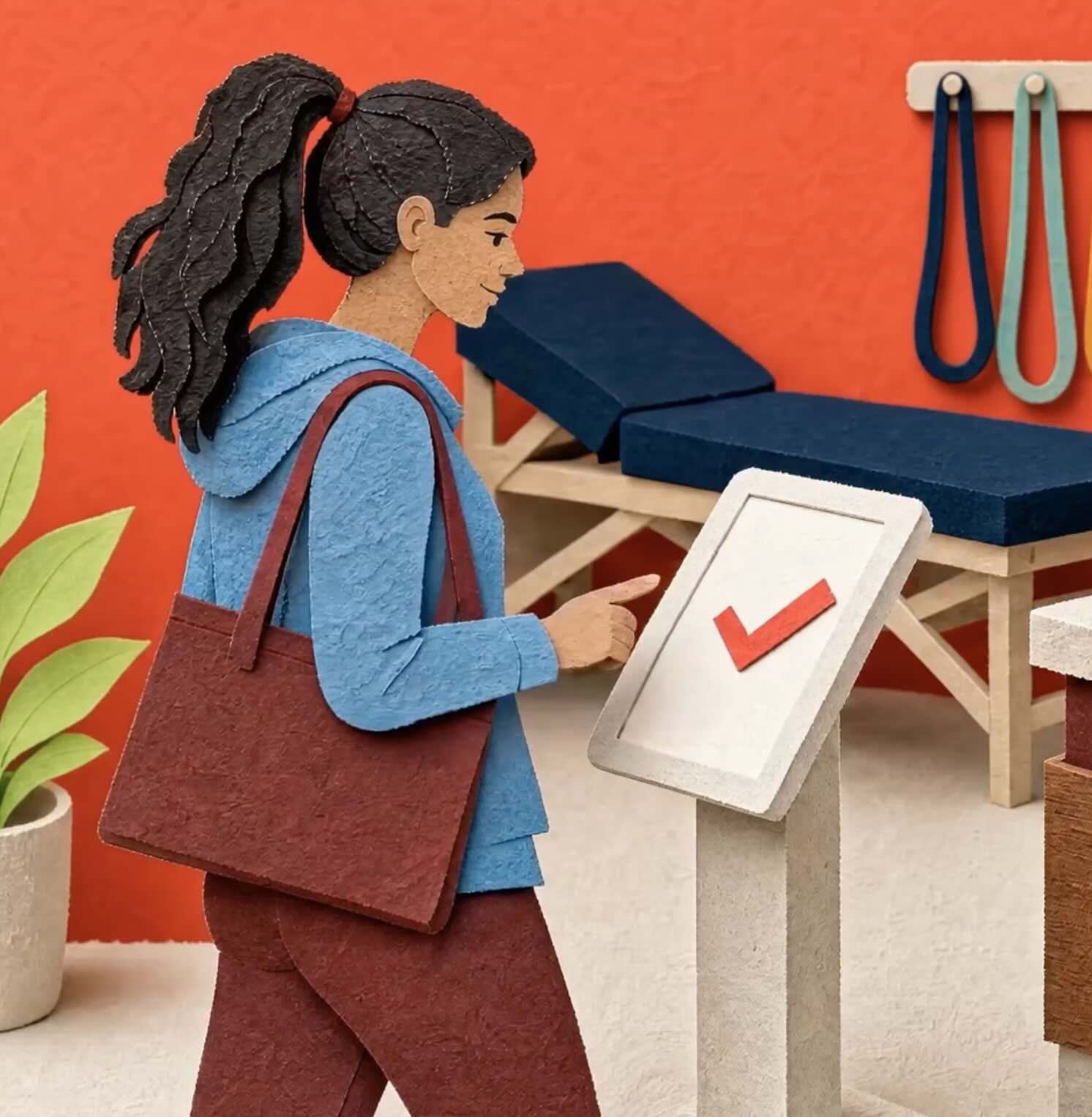
Kiosk takes over the 2 tasks that used to require someone standing at the front: Check-in and copay collection. When a patient arrives, they check themselves in on the kiosk instead of announcing themselves to a receptionist, and any outstanding balance plus today's charge is prompted right there, while the patient is standing at the kiosk, rather than getting chased down after the fact.
For patients, the experience isn't unfamiliar. Dan points to how normalized self-service check-in has become in healthcare generally, comparing it to a kiosk he encountered at his own primary care office. Most patients adapt quickly, though he notes some, especially elderly patients, look around for a person first before finding their way to the kiosk with its posted instructions. Once patients go through it a couple of times, Dan says the interaction becomes routine.
Collecting payment before the visit, rather than billing after the fact, translates into real overall gains. Across Prompt's customer base, clinics using Kiosk see 10-15% more revenue collected upfront compared to clinics without it, with some data pointing to gains as high as 29% in time-of-service collections.
What did Pinnacle Rehabilitation Network gain from the change?
The savings from operating without a full front desk went straight into clinician compensation, not staff cuts. It freed up funds that had gone to front desk salaries, and that money moved to keeping pace with rising clinician pay. As he put it, "We were able to take that money and reallocate it back towards what was really important, and that was having therapists to treat patients."
The change also reshaped the clinician role into something closer to a full patient manager, responsible for the entire visit experience rather than just treatment. Dan says the shift has made clinics calmer and deepened the relationship between clinician and patient. It's also helped with retention: One of Dan's clinicians turned down a competing offer after learning the new employer didn't have Prompt or Sidekick.
Patient experience held steady through the change, too. Dan points to NPS scores and Google reviews that have stayed high, even as clinics moved away from a staffed front desk.
I consider Prompt part of my team. If you're looking for a team that's going to help you leverage the technology to do what we do... then this is the group you want to go with.
Pinnacle’s shift to an unmanned front desk gave the practice room to invest in technology, the patient experience, and the clinicians treating those patients (all without needing to add additional headcount).
For Dan, Prompt isn’t a vendor so much as it is an integral part of the business. “I consider Prompt part of my team,” Dan said. “If you’re looking for a team that’s going to help you leverage the technology to do what we do, improve your margins, and solve a lot of problems for you, then this is the group you want to go with.”
FAQ
How many clinics does Pinnacle Rehabilitation Network operate without a full-time front desk?
28 of the practice's 34 outpatient orthopedic clinics, or 75%, operate without a full-time front desk.
What replaced the front desk at Pinnacle Rehabilitation Network's clinics?
Prompt's Kiosk for check-in and copay collection, Prompt Plus for scheduling, and Sidekick for point-of-service documentation, backed by a small central call center for more complicated cases
Did Pinnacle Rehabilitation Network cut jobs to make this change?
No. Dan says the revenue saved by not staffing every front desk was redirected into competitive clinician pay.